By Paolo Polese
Volunteer, Limbloss Connection
A Different Way of Looking at Safety
When people think about recovery after limb loss, they often picture learning to walk again, receiving a prosthesis, or returning to activities they enjoy. Those milestones are certainly important, but there is another part of rehabilitation that doesn’t receive enough attention: learning how to stay safe. I didn’t appreciate how much everyday movement would change until I experienced it myself. Before limb loss I never thought twice about walking across a wet floor, carrying groceries up a step, or reaching for something on a high shelf. Afterwards, I realized that almost every movement required a little more planning and a little more patience.
At first, I found that frustrating. I wanted to do everything at the same pace I always had. The problem was that my body was learning a completely new way to balance. Confidence often arrived before my physical abilities had fully caught up, and that combination can lead to unnecessary risks.
The Fear of Falling
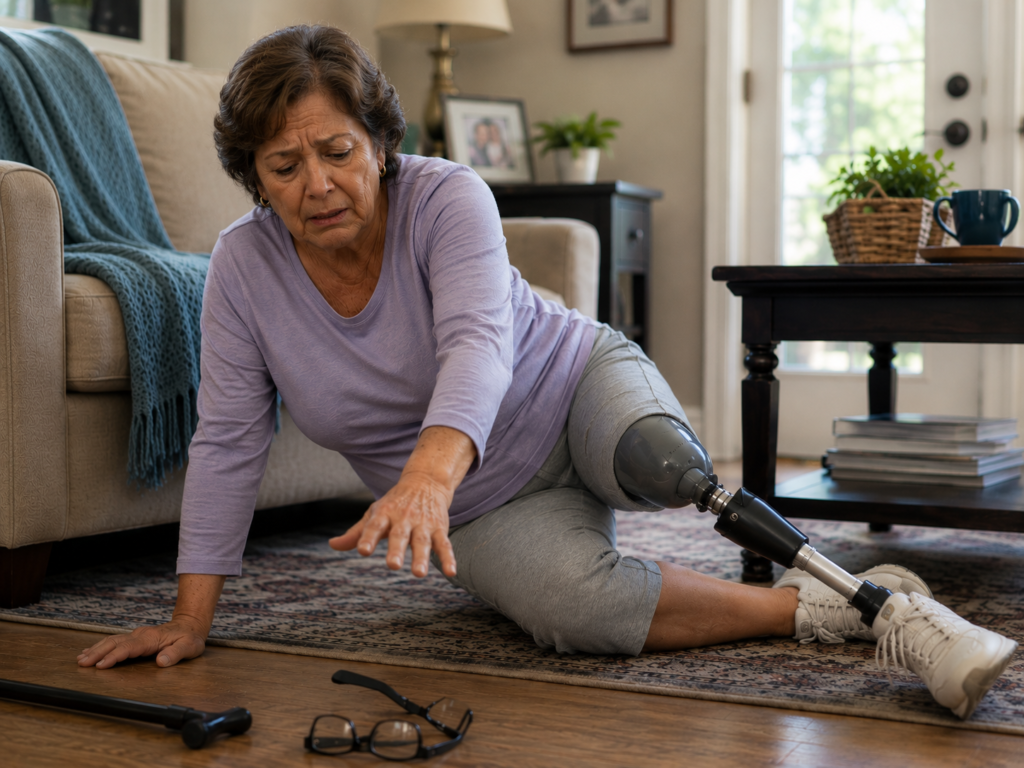
Whether you’ve already fallen or you’re simply worried that you might, I want you to know those feelings are completely normal. Research has consistently shown that falls are common among people living with lower-limb amputations, and many people develop a genuine fear of falling. That fear can sometimes become just as limiting as a fall itself because it convinces us to stop trying.
I remember becoming cautious about situations that had never crossed my mind before. Uneven sidewalks, icy parking lots, loose gravel, crowded shopping centres, or carrying a cup of coffee while walking suddenly felt different. Rather than seeing that caution as weakness, I eventually learned to see it as awareness. Awareness keeps us safe while confidence continues to grow.
Learning to Slow Down
One of the greatest lessons I learned was that slowing down is not the same as giving up. Recovery is not a race. Taking an extra few seconds before standing, making sure my prosthesis felt secure, or checking the ground ahead of me became simple habits that dramatically reduced unnecessary risks.
Those habits eventually became automatic. Instead of constantly worrying about falling, I was quietly preventing many situations that could have led to one. Small decisions repeated every day often make the biggest difference over time.
Your Home Can Help or Hurt Your Recovery
When I returned home, I quickly realized that my surroundings played a much bigger role than I expected. Better lighting, keeping floors clear, arranging furniture to create wider pathways, and making frequently used items easier to reach all reduced stress. Instead of feeling like I had to constantly watch for obstacles, my home gradually became a place where I could focus on rebuilding my independence.
These changes weren’t expensive or dramatic. They simply removed unnecessary hazards and allowed me to spend more energy on healing instead of worrying about accidents.
Listen to Your Body
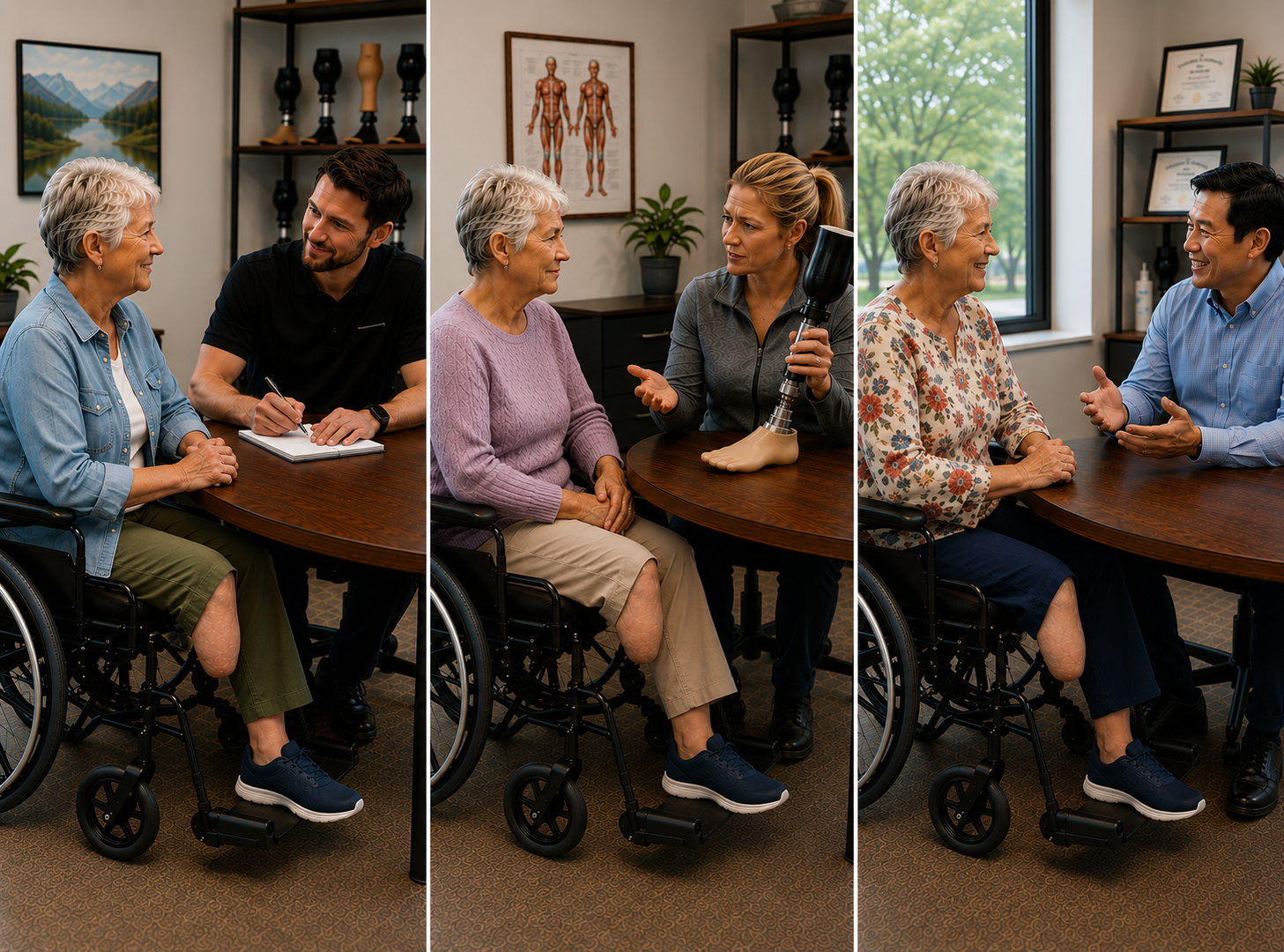
There were days when I felt tired long before I admitted it to myself. Fatigue affects concentration, balance, and reaction time. I also learned that changes in my prosthetic fit could affect how confidently I walked. If something didn’t feel quite right, I learned not to ignore it. Speaking with my prosthetist or physiotherapist often solved small issues before they became much larger problems.
The same is true for medications, dizziness, pain, or changes in your residual limb. Paying attention to those changes isn’t being overly cautious. It’s part of taking responsibility for your own health and safety.
Confidence Comes One Step at a Time
People sometimes think confidence appears the day you receive your prosthesis. In reality, confidence is earned through repetition. Every successful transfer, every therapy session, every walk through the neighbourhood, and every outing with family quietly builds trust in your abilities.
There will probably be moments that shake your confidence. That’s okay. One difficult day does not erase all the progress you’ve already made. Recovery is built over weeks and months, not hours.
We’re Stronger Together
One of the greatest gifts of being part of Limbloss Connection has been hearing how other people solve everyday challenges. Someone always has an idea you haven’t considered or a story that reminds you you’re not the only one navigating these obstacles. That shared experience has taught me that staying safe isn’t about living in fear. It’s about making smart decisions that allow us to keep enjoying life.
If you’re worried about falling, talk about it. Ask questions. Share your concerns with your rehabilitation team and connect with other people living with limb loss. You’ll quickly discover that confidence grows faster when we learn from one another.
Looking back, I realize preventing falls wasn’t about becoming fearless. It was about becoming prepared. The more prepared I became, the more freedom I regained. That’s what I hope for everyone beginning this journey—greater confidence, greater independence, and the knowledge that every careful step forward is still a step forward.