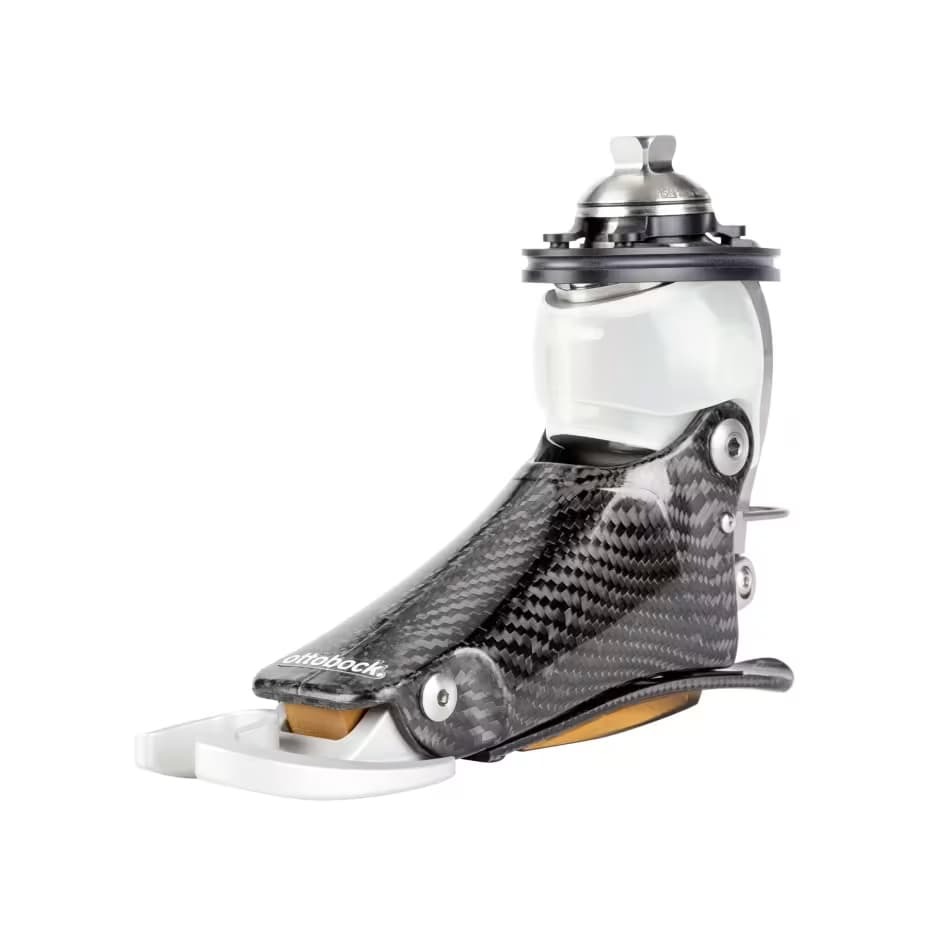
Choosing a prosthetist is one of the most important decisions you may make after limb loss. A prosthetist does much more than provide you with a prosthetic limb. They become an important part of your rehabilitation team and, for many people, someone they will work with for years.
A well-fitting prosthesis can help improve mobility, independence, comfort, confidence, and participation in everyday life. A poorly fitting prosthesis can lead to pain, skin problems, frustration, reduced mobility, and sometimes the inability to use the prosthesis at all.
The relationship between you and your prosthetist therefore matters.
Technical knowledge is important, but it is only part of what makes a good prosthetist. Communication, accessibility, problem-solving, experience, follow-up care, and a willingness to understand your goals can be just as important.
Whether you are receiving your first prosthesis or considering changing prosthetists, knowing what to look for can help you make a more informed decision.
Understanding What a Prosthetist Does
A prosthetist is a healthcare professional who specializes in designing, fitting, adjusting, and maintaining prosthetic limbs.
Their role can include evaluating your residual limb, discussing your goals, recommending components, creating your socket, aligning your prosthesis, making adjustments, helping resolve comfort problems, and maintaining or repairing the prosthesis over time.
Your prosthetist may also work closely with other members of your rehabilitation team, including:
● Physiotherapists
● Occupational therapists
● Physiatrists and rehabilitation physicians
● Surgeons
● Nurses
● Wound-care specialists
● Prosthetic technicians
● Funding agencies and insurance providers
A good prosthetist should see you as more than an amputation level or a prescription. They need to understand what you actually want to do with your prosthesis.
Start With Your Own Goals
Before comparing prosthetic clinics or practitioners, think about what you want your prosthesis to help you accomplish.
Your goals may be very different from those of another person with the same level of limb loss.
Perhaps your priority is being able to move safely around your home. You may want to return to work, drive, travel, exercise, play with your children or grandchildren, walk your dog, participate in sports, cook, garden, or simply stand comfortably for longer periods.
Tell potential prosthetists about these goals. Consider discussing things such as:
● Your typical daily routine
● Your home environment
● Your work
● How far you would like to walk
● Whether you regularly encounter stairs
● Whether you walk on grass or uneven surfaces
● Recreational activities
● Sports or exercise
● Travel
● Driving
● Your current mobility aids
● Previous problems with prosthetic devices
● Other functional priorities
The better your prosthetist understands your life, the better they can recommend solutions appropriate for you.
Experience With Your Level of Limb Loss Matters
Not every prosthetic case is the same.
A person with a below-knee amputation has different prosthetic requirements than someone with an above-knee amputation. Bilateral limb loss creates additional considerations. Upper-limb prosthetics involve entirely different technologies and rehabilitation strategies.
Ask how much experience the prosthetist has working with people whose needs are similar to yours.
● How frequently do you work with people with my level of limb loss?
● Do you regularly work with bilateral amputees?
● Do you have experience with people who have complex residual limbs?
● What types of suspension systems do you commonly use?
● What experience do you have with the components being recommended?
● Have you worked with people who have similar mobility goals?
Experience does not necessarily mean that someone has seen every possible situation. What matters is whether they understand the challenges associated with your particular circumstances and know how to troubleshoot problems when they occur.
The Socket Is Extremely Important
People often become interested in prosthetic technology—the foot, knee, hand, microprocessor, carbon-fibre components, or other advanced features.
Those components certainly matter. But one of the most important parts of any prosthesis is the socket.
The socket is the interface between your body and the prosthetic device. If it does not fit properly, even the most sophisticated prosthetic technology may be difficult or impossible to use comfortably.
Poor socket fit can contribute to:
● Pain
● Excessive pressure
● Skin irritation
● Blisters
● Open wounds
● Pistoning or movement inside the socket
● Instability
● Difficulty controlling the prosthesis
● Changes in walking pattern
● Reduced wearing time
Ask prospective prosthetists about their approach to socket design and fitting. A prosthetist should be willing to make adjustments rather than expecting you to simply tolerate significant discomfort.
Pay Attention to How Well They Listen
One of the most valuable qualities in a prosthetist is the ability to listen.
During an appointment, notice whether the prosthetist gives you enough time to explain your concerns. Do they ask follow-up questions? Do they take your description of pain seriously? Do they explain why they are recommending something? Do they ask about your lifestyle? Do they seem interested in what you want to accomplish?
You should feel comfortable saying: “This hurts.” “This doesn’t feel stable.” “I don’t think this is working.” “I want to understand my other options.”
A strong clinical relationship allows for disagreement and discussion. You should never feel that asking questions makes you a difficult patient.
They Should Explain Your Options
There is rarely only one possible prosthetic solution.
Different sockets, liners, suspension systems, feet, knees, hands, joints, and other components may be available depending on your level of limb loss, functional needs, health, funding, and lifestyle.
Your prosthetist should explain why a particular option is being recommended. Ask:
● Why are you recommending this component?
● What are the advantages?
● What are the disadvantages?
● Are there other options?
● Why would one option be better for me?
● What limitations does this component have?
● What maintenance will it require?
● What happens if it does not work well for me?
You do not need to become a prosthetic expert. But you should understand enough to participate meaningfully in decisions about your own prosthetic care.
Be Cautious of Promises That Sound Too Good
Modern prosthetic technology can accomplish remarkable things, but no prosthesis perfectly replaces a biological limb.
Be cautious if someone promises that a particular prosthesis will eliminate every problem or allow you to do everything you did before limb loss.
Outcomes vary. Your success with a prosthesis may depend on many factors, including:
● Level of limb loss
● Residual-limb condition
● Strength
● Balance
● Overall health
● Pain
● Skin condition
● Rehabilitation
● Component selection
● Socket fit
● Practice
● Personal goals
A trustworthy prosthetist should discuss both the potential benefits and limitations of the equipment being recommended.
Ask About Adjustments and Follow-Up Care
A prosthesis is rarely fitted once and never adjusted again.
Your residual limb may change size and shape, particularly during the months following amputation. Your activity level may change. Components may require alignment changes. Liners can wear out. Sockets can become loose. Pressure points can develop.
Ask how the clinic handles these situations. Important questions include:
● How quickly can I get an appointment if I develop a problem?
● Are routine adjustments included?
● How frequently will you see me after receiving my prosthesis?
● What happens if my residual limb changes volume?
● How are urgent problems handled?
● What happens if I develop a wound?
● Who do I contact if something breaks?
● Do you provide emergency repairs?
The quality of follow-up care can sometimes matter as much as the original prosthesis.
Consider the Location of the Clinic
Distance matters more than many first-time prosthesis users realize.
During the initial fitting process, you may require several appointments. Later, you may need adjustments, repairs, new liners, socket modifications, or component servicing.
A clinic that is two hours away may offer excellent care, but consider whether you can realistically make that trip whenever an adjustment is required.
Think about:
● Driving distance
● Public transportation
● Accessible parking
● Wheelchair accessibility
● Appointment availability
● Travel costs
● Weather conditions
● How easily you can reach the clinic if your prosthesis cannot be worn
Convenience should not necessarily determine your choice, but it deserves consideration.
Look at the Entire Clinic, Not Just One Person
Your prosthetist is important, but you may interact with several people at the clinic.
Reception staff, technicians, assistants, billing personnel, and other prosthetists can all affect your experience.
Pay attention to how the clinic operates. Are phone calls returned? Are appointments scheduled reasonably? Are repairs handled efficiently? Is the clinic accessible? Are staff respectful? Are you kept informed when equipment or components are delayed?
A technically excellent prosthetist working within a poorly organized clinic can still create a frustrating experience.
Ask About Communication With Your Rehabilitation Team
Prosthetic rehabilitation works best when professionals communicate.
Your prosthetist may need to collaborate with your physiotherapist or occupational therapist to evaluate alignment, walking patterns, functional ability, or difficulties performing particular activities.
Sometimes a problem that appears to be caused by the prosthesis may involve strength, balance, technique, or another rehabilitation issue. Likewise, something initially blamed on walking technique may actually require a socket or alignment adjustment.
Collaboration helps identify the difference.
Understand Funding Before Making Decisions
Prosthetic funding can be complicated.
Depending on where you live and your circumstances, funding may involve government programs, private insurance, workplace benefits, veterans’ benefits, charitable organizations, or personal payment.
Before agreeing to a prosthesis, ask for a clear explanation of costs. You should understand:
● Total cost of the prosthesis
● What government funding covers
● What private insurance covers
● Your personal contribution
● Costs of upgrades
● Costs of replacement liners
● Repair costs
● Replacement schedules
● Warranty coverage
● Costs associated with future sockets
Ask for estimates in writing whenever possible. Do not assume that every component being discussed is fully covered.
Ask About Different Manufacturers
Prosthetic clinics may work with products from several manufacturers.
There is nothing inherently wrong with a clinic preferring products it knows well. Familiarity can actually be beneficial. However, recommendations should still be based on what is appropriate for you.
You can ask:
● What other products could accomplish the same goal?
● Why do you prefer this manufacturer?
● Have you had good results with this component?
● What are the alternatives?
● Can I trial different options when appropriate?
The objective should be finding the right solution rather than simply selecting a particular brand.
Ask About Trial Components
Depending on the type of prosthesis and component, it may sometimes be possible to trial equipment before making a final decision.
Something that looks impressive on paper may feel completely different when you actually use it.
When testing components, consider:
● Stability
● Comfort
● Ease of movement
● Walking speed
● Uneven surfaces
● Ramps
● Stairs
● Sitting and standing
● Fatigue
● Confidence
Your everyday experience matters.
Watch for Red Flags
Most prosthetists are committed professionals, but you should still recognize signs that a relationship may not be working.
Potential concerns include:
● Your pain is repeatedly dismissed.
● You are told significant discomfort is something you simply need to tolerate.
● Skin breakdown is not taken seriously.
● Your questions are discouraged.
● You are pressured toward expensive technology without a clear explanation.
● Alternatives are never discussed.
● Costs are unclear.
● Appointments are consistently difficult to obtain.
● Problems repeatedly remain unresolved.
● Your functional goals are ignored.
● You feel uncomfortable expressing concerns.
One problem does not necessarily mean you need a new prosthetist. Prosthetic fitting can be complicated, and difficult problems sometimes require multiple attempts to solve. The more important question is how the prosthetist responds when something is not working.
Getting a Second Opinion Is Okay
If you are uncertain about a recommendation, experiencing persistent problems, or simply want to understand your options, consider getting another opinion.
A second opinion does not necessarily mean you are leaving your current prosthetist. Another practitioner may suggest a different socket design, suspension system, component, alignment strategy, or approach.
You are entitled to ask questions about equipment that affects your mobility and daily life.
Talk to Other People Living With Limb Loss
Peer experience can be extremely helpful when choosing a prosthetist.
Other prosthesis users can tell you about aspects of care that may be difficult to evaluate during an initial consultation. Ask about:
● How responsive the prosthetist is when problems occur
● How quickly adjustments are made
● Whether appointments feel rushed
● How the clinic handles difficult socket problems
● Whether costs are explained clearly
● How repairs are handled
● Whether the prosthetist listens
● Whether they would choose the same clinic again
Keep in mind that everyone’s experience is different. Use recommendations as information rather than treating them as guarantees.
Your Relationship With Your Prosthetist May Last for Years
Prosthetic care does not end when you walk out of the clinic with your prosthesis.
Sockets wear out. Residual limbs change. Bodies change. Components require maintenance. Technology evolves. Your lifestyle may change. Your health may change.
For many people living with limb loss, their relationship with a prosthetist continues for many years. That makes trust especially important.
You want someone who knows your history, understands what has and has not worked, and is willing to continue adapting your prosthetic care as your needs change.
Questions to Ask Before Choosing a Prosthetist
Experience
● How long have you been practicing?
● How frequently do you work with people with my level of limb loss?
● Do you have experience with people who have similar mobility needs?
● Do you work with bilateral or multiple-limb amputees if applicable?
Prosthetic Options
● What type of prosthesis would you initially recommend?
● Why?
● What alternatives are available?
● What are the advantages and disadvantages of each option?
● Can I trial components when appropriate?
Socket Fit
● What type of socket are you recommending?
● What suspension system will be used?
● How do you handle changes in residual-limb volume?
● What happens if the socket becomes uncomfortable?
Follow-Up
● How frequently will I be seen after receiving the prosthesis?
● How quickly can I get an adjustment?
● What happens if I develop a skin problem?
● How do you handle urgent repairs?
Rehabilitation
● Will you communicate with my physiotherapist or occupational therapist?
● Can my therapist contact you if they notice a problem?
● Do you perform gait assessments or collaborate with rehabilitation professionals?
Costs
● What is the total estimated cost?
● What portion is funded?
● What will I need to pay?
● Are adjustments included?
● What future expenses should I anticipate?
● What warranty is provided?
What Makes a Good Prosthetist?
There is no single quality that defines the perfect prosthetist. The best prosthetic relationships usually combine technical expertise with communication, patience, problem-solving, and trust.
A good prosthetist should:
● Listen to your concerns
● Take pain and skin problems seriously
● Explain your options
● Understand your goals
● Be willing to make adjustments
● Communicate with your rehabilitation team
● Explain costs clearly
● Provide appropriate follow-up
● Help you understand your equipment
● Recognize when something is not working
● Be willing to try another approach when necessary
Perhaps most importantly, you should feel that you are working together.
You Are Part of the Prosthetic Team
It can be easy to assume that healthcare professionals make the decisions and your role is simply to follow their recommendations.
Prosthetic care works differently.
Your prosthetist understands prosthetic design and technology. Your physiotherapist or occupational therapist understands rehabilitation and movement. Your physicians understand your medical situation. But you are the person who knows what it actually feels like to wear the prosthesis.
You know where it hurts. You know when something feels unstable. You know what happens after several hours of use. You know which activities matter most to you.
That information is essential. Successful prosthetic care should be a partnership between clinical expertise and lived experience.
Choosing Someone Who Understands Your Life
The right prosthetist is not necessarily the person with the biggest clinic, the newest equipment, or the most impressive technology.
It is someone who combines expertise with the willingness to understand you.
They should want to know where you want to go—not simply what component they can put on your prosthesis.
Your prosthetic needs may change many times throughout your life, and there will probably be occasions when something does not work perfectly the first time.
What matters is having someone willing to listen, investigate the problem, make adjustments, explain your options, and continue working with you toward a solution.
Choosing the right prosthetist is ultimately about choosing a partner in your mobility, independence, and rehabilitation.
Connecting With Others Who Understand
One of the best resources when looking for a prosthetist can be other people living with limb loss.
They can share the practical side of their experiences—the things that may not appear on a clinic website or brochure.
They can tell you what happened when their socket stopped fitting, how quickly they received an appointment, whether their concerns were taken seriously, and what they wish they had known when choosing their first prosthetist.
Limbloss Connection provides opportunities for people living with limb loss and limb difference to connect, share experiences, ask questions, and learn from one another.
Peer advice should never replace professional prosthetic or medical care, but lived experience can help you know which questions to ask and what possibilities to explore.
The right prosthetist cannot remove every challenge associated with limb loss. But having someone you trust, who listens and works with you when challenges arise, can make an enormous difference.