By Kevin Gray
President & Co-Founder, Limbloss Connection
Bilateral Below-Knee Amputee
I still remember thinking about my first visit to a prosthetist long before the appointment actually arrived. After months in the hospital, multiple surgeries, countless dressing changes, rehabilitation sessions, and more setbacks than I care to remember, that appointment represented hope. It wasn’t simply another medical appointment on my calendar. It was the first time I could genuinely picture life moving forward. Until then, every appointment had focused on saving my life, healing wounds, or managing complications. This appointment was different because it focused on living again.
If you’re preparing for your own first visit, you’re probably experiencing a mixture of excitement and anxiety. You may be wondering if you’ll walk again, whether a prosthesis will hurt, how long the process will take, or whether you’ll ever feel like yourself again. I asked every one of those questions. Looking back, I wish someone had sat beside me and explained what to expect. Not just the clinical details, but the emotional journey as well. My hope is that this article can be that conversation for you.
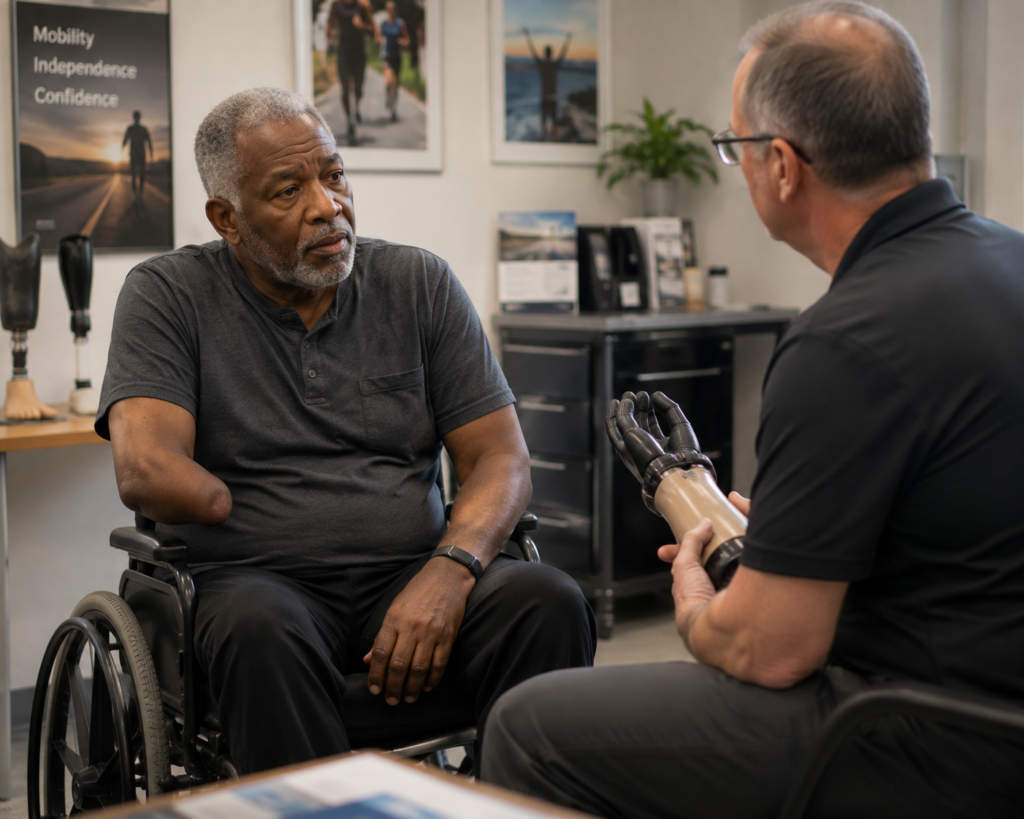
One of the biggest misconceptions is that you’ll arrive at the clinic, receive a prosthesis, and walk out the door. That almost never happens. Your first appointment is about building a foundation. Your prosthetist wants to understand who you are before deciding what technology might best support your life. They will ask about your health, your surgery, your home, your work, your hobbies, and the goals that matter most to you. Those conversations are every bit as important as the physical assessment because no two amputees live the same life.
During my own rehabilitation I learned that prosthetic care isn’t about finding the most expensive components or the newest technology. It’s about finding the right solution for the person. Someone returning to construction has different needs than someone whose goal is safely walking around the neighbourhood or keeping up with grandchildren. A prosthesis should fit your life rather than forcing you to change who you are.
Your prosthetist will also spend time examining your residual limb. They will look at how your incision has healed, whether swelling remains, how sensitive the skin is, your range of motion, muscle strength, and any areas that may need extra attention. If they tell you that you need more time before being fitted, don’t interpret that as failure. I know waiting can be frustrating because you’ve already waited so long, but a well-healed residual limb often leads to a better fitting socket and a more comfortable experience in the months ahead.
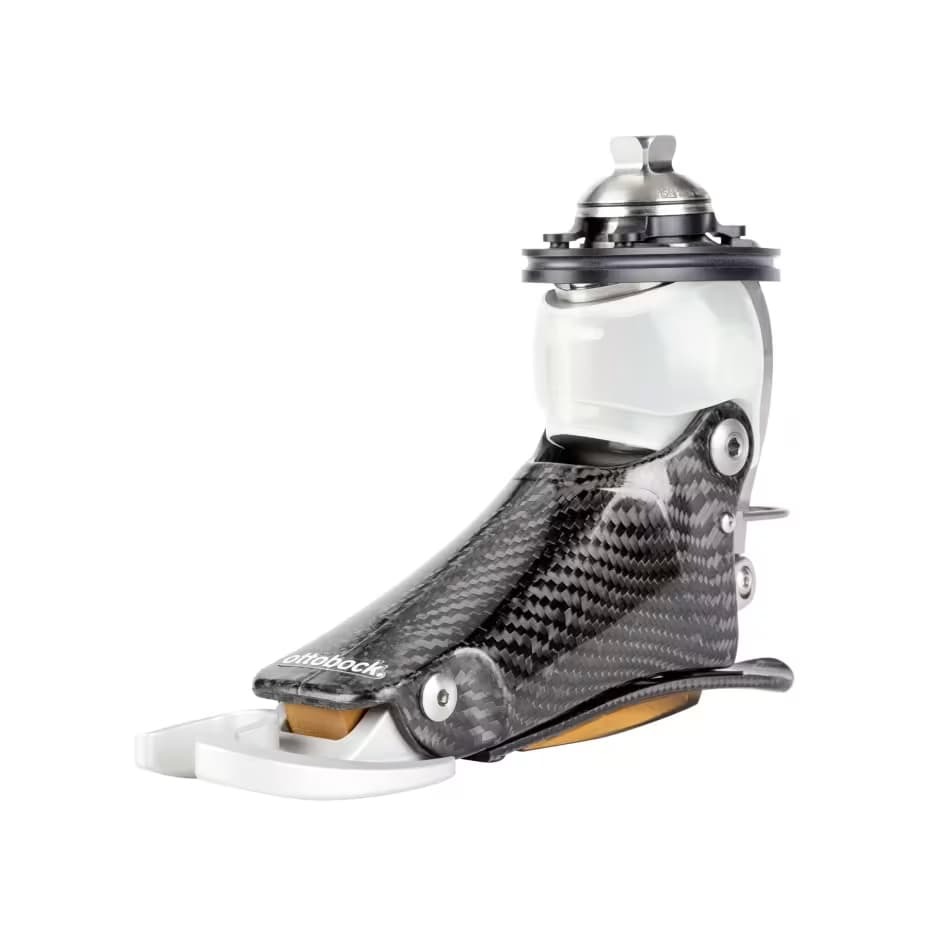
Before I became an amputee, I assumed the prosthetic foot or knee would be the most important part of the prosthesis. I quickly discovered that comfort begins with the socket. The socket is where your body meets the prosthesis, and if that connection isn’t comfortable, even the most advanced technology won’t feel right. Don’t be surprised if your prosthetist spends more time talking about sockets, liners, suspension systems, and fit than about the foot or knee itself. They know that comfort is the foundation of confidence.
Something else I encourage every new amputee to do is ask questions. Ask lots of them. If you don’t understand a recommendation, ask for an explanation. If you’re worried about skin problems, phantom pain, costs, maintenance, travel, work, or sports, bring it up. Your prosthetist isn’t there simply to build a prosthesis; they’re there to help you make informed decisions. The more involved you become in your own rehabilitation, the more confident you’ll feel throughout the process.
There is another side of the appointment that often isn’t talked about enough. It is emotional. The first time you stand, the first time you see yourself wearing a prosthesis, or even the first time you discuss your future can bring excitement, grief, relief, fear, and hope all within the same hour. I experienced all of those emotions. There were moments when I felt optimistic and others when I questioned whether I’d ever regain the independence I once enjoyed. Those feelings are completely normal. Healing isn’t only physical; it’s emotional as well.
One lesson I’ve learned is that rehabilitation isn’t measured by giant leaps forward. It’s measured by small victories that gradually build confidence. The first successful transfer. The first comfortable fitting. The first steps between the parallel bars. The first time you stand long enough to make a cup of coffee. Each achievement may seem small to someone else, but together they create a life that continues to expand. Celebrate those moments because they matter.
If I could leave you with one piece of advice, it would be this: don’t compare your progress with anyone else’s. Every amputation is different. Every medical history is different. Every rehabilitation journey is different. Focus on becoming a little stronger, a little more knowledgeable, and a little more confident than you were yesterday. Progress is rarely a straight line, but if you remain patient and keep moving forward, you’ll be surprised by what becomes possible.
My first visit to a prosthetist didn’t instantly restore my independence, but it changed the direction of my recovery. It marked the beginning of a partnership with professionals who believed in my potential, even when I wasn’t sure I believed in it myself. Years later, after becoming a bilateral below-knee amputee and helping establish Limbloss Connection, I appreciate even more how important that first appointment was. It wasn’t about receiving a device. It was about beginning a new chapter.
At Limbloss Connection, we believe no one should have to navigate limb loss alone. The knowledge you gain from healthcare professionals is essential, but the encouragement you receive from people who have walked this path is equally powerful. Whether you’re waiting for your first appointment or already wearing your first prosthesis, remember that there is an entire community ready to support you. I hope your first visit to a prosthetist is the beginning of renewed confidence, realistic expectations, and the realization that life after limb loss can still be full of purpose, achievement, and hope.