Introduction
The first ninety days after an amputation are unlike any other period in your life. They are filled with questions, uncertainty, moments of hope, and moments of grief. During this time, you are not only recovering from surgery—you are learning to adapt to a different way of living while processing an experience that has changed your future.
Many people assume recovery is measured only by how quickly a wound heals or when a prosthesis is fitted. In reality, recovery is also emotional. It involves rebuilding confidence, learning new skills, accepting help, and discovering that life can still be meaningful despite the challenges ahead. Every person’s journey is different, but knowing what to expect can make those first months feel less overwhelming.
The First Few Days
Immediately after surgery, your body focuses on healing while your mind begins trying to understand what has happened. It is common to experience shock, disbelief, sadness, relief, or even numbness. There is no correct emotional response. Some people want to talk, while others need quiet time to process everything that has happened.
During these early days, your healthcare team will focus on pain management, wound care, preventing complications, and helping you begin moving safely. Even small achievements, such as sitting on the edge of the bed or transferring into a chair, are important milestones.
The Emotional Rollercoaster
Recovery rarely follows a straight path. One day you may feel encouraged after making progress in therapy, while the next day you may feel frustrated or discouraged. These emotional highs and lows are normal.
Many people grieve not only the loss of a limb but also changes in independence, employment, hobbies, relationships, and self-image. Give yourself permission to experience these emotions without judging yourself. Healing is not about pretending everything is fine; it is about moving forward one day at a time.
Building a New Routine
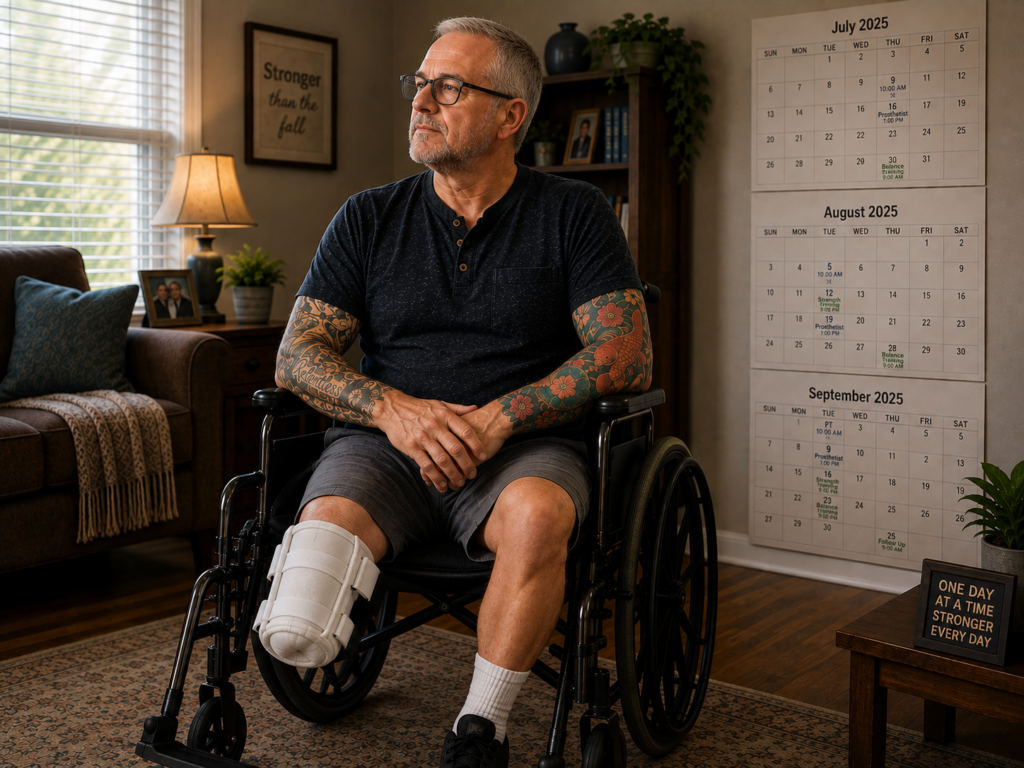
As the weeks pass, rehabilitation gradually becomes part of your daily life. Physiotherapy helps improve strength and balance, while occupational therapy focuses on practical activities such as dressing, cooking, bathing, and returning to everyday routines. Progress often comes through repetition rather than dramatic breakthroughs.
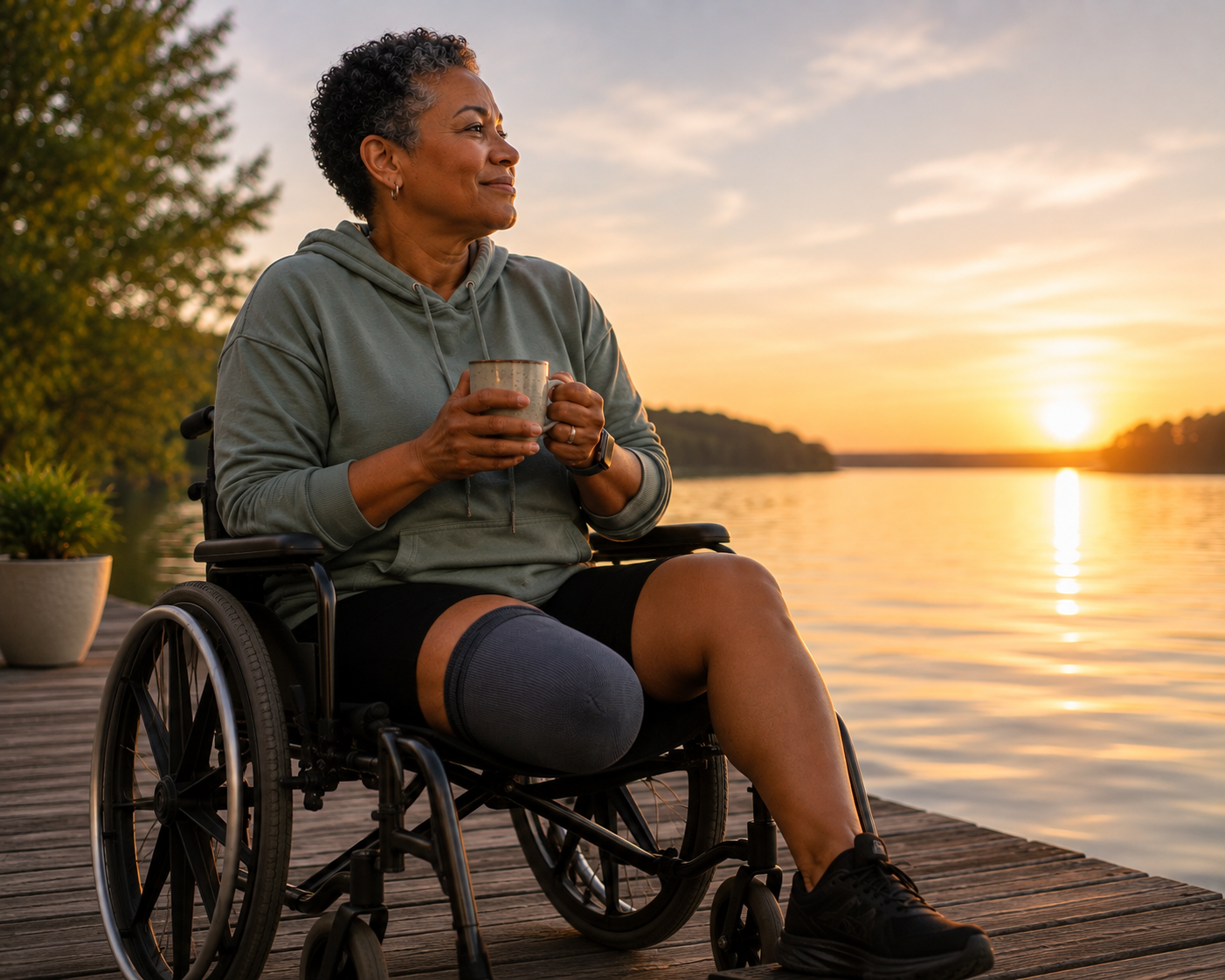
It can also be helpful to establish simple routines outside therapy. Getting dressed each morning, eating regular meals, spending time outdoors, or speaking with a friend can provide a sense of normalcy during a period that otherwise feels unpredictable.
Preparing for the Future
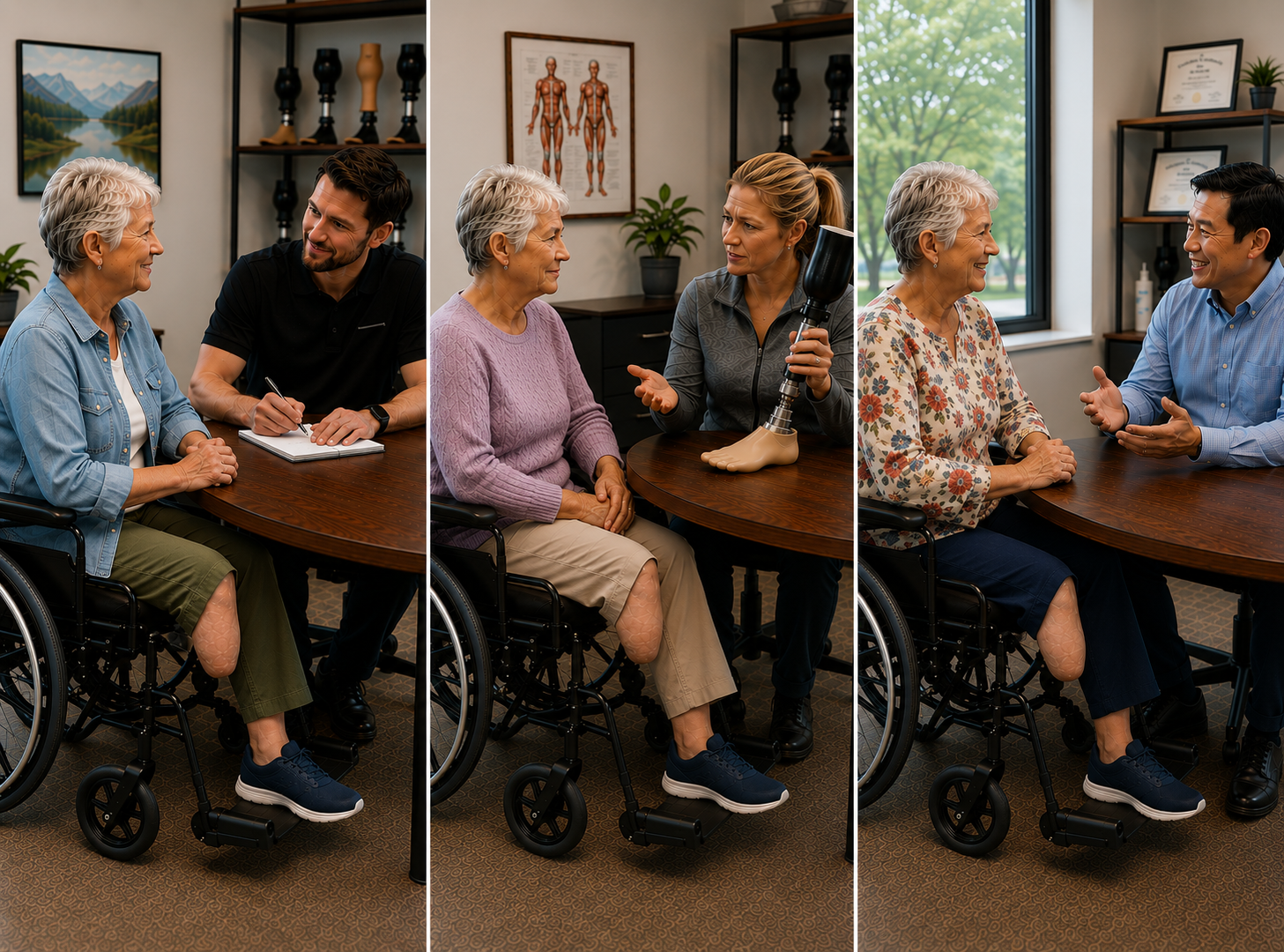
If a prosthesis is part of your rehabilitation plan, your healthcare team will begin discussing the fitting process once your residual limb has healed sufficiently. It is important to remember that learning to use a prosthesis takes time. Most people require ongoing adjustments, rehabilitation, and patience as their residual limb changes shape.
Not everyone will use a prosthesis, and that does not define success. The goal is always to help you live as independently and confidently as possible using the approach that best meets your needs.
The Importance of Connection
One of the most powerful forms of healing comes from talking with someone who has lived through a similar experience. Peer support can answer practical questions, reduce feelings of isolation, and provide hope during difficult moments. Many people say that meeting another amputee for the first time changed the way they viewed their own future.
Family members and friends also play an important role. Let them know what kind of support is helpful and remember that they, too, are adjusting to significant changes.
Looking Beyond the First 90 Days
Although the first three months can feel overwhelming, they are only the beginning of your journey. Over time you will continue learning new skills, building confidence, and discovering ways to participate in the activities that matter most to you. There will be challenges, but there will also be victories that once seemed impossible.
At Limbloss Connection, we believe no one should have to navigate limb loss alone. Through virtual support groups, peer support, educational resources, and community events, we help people across Canada connect, learn, and thrive together. Whatever stage of recovery you are in, remember that hope grows stronger when it is shared.