Finding Hope, Purpose, and Confidence After Limb Loss
By Kevin Gray
President & Co-Founder, Limbloss Connection
Bilateral Below-Knee Amputee
Acceptance Doesn’t Mean Giving Up
When people hear the word acceptance, they often imagine that it means giving up on their goals or settling for a life that is somehow less meaningful. That wasn’t my experience at all. Acceptance wasn’t about lowering my expectations. It was about recognizing that my life had changed and deciding that I was still going to build a life worth living.
There were days when I wished I could turn back time. I missed the freedom of walking without thinking, the activities I enjoyed, and the confidence that came with independence. Those feelings didn’t disappear overnight. Acceptance happened gradually as I stopped asking, “Why did this happen to me?” and started asking, “What can I do today to move forward?”
For many people, acceptance is not a destination. It is a process that continues throughout recovery. Every new milestone, setback, prosthetic adjustment, or life event may require you to adapt again. That is completely normal.
Grieving the Life You Once Knew
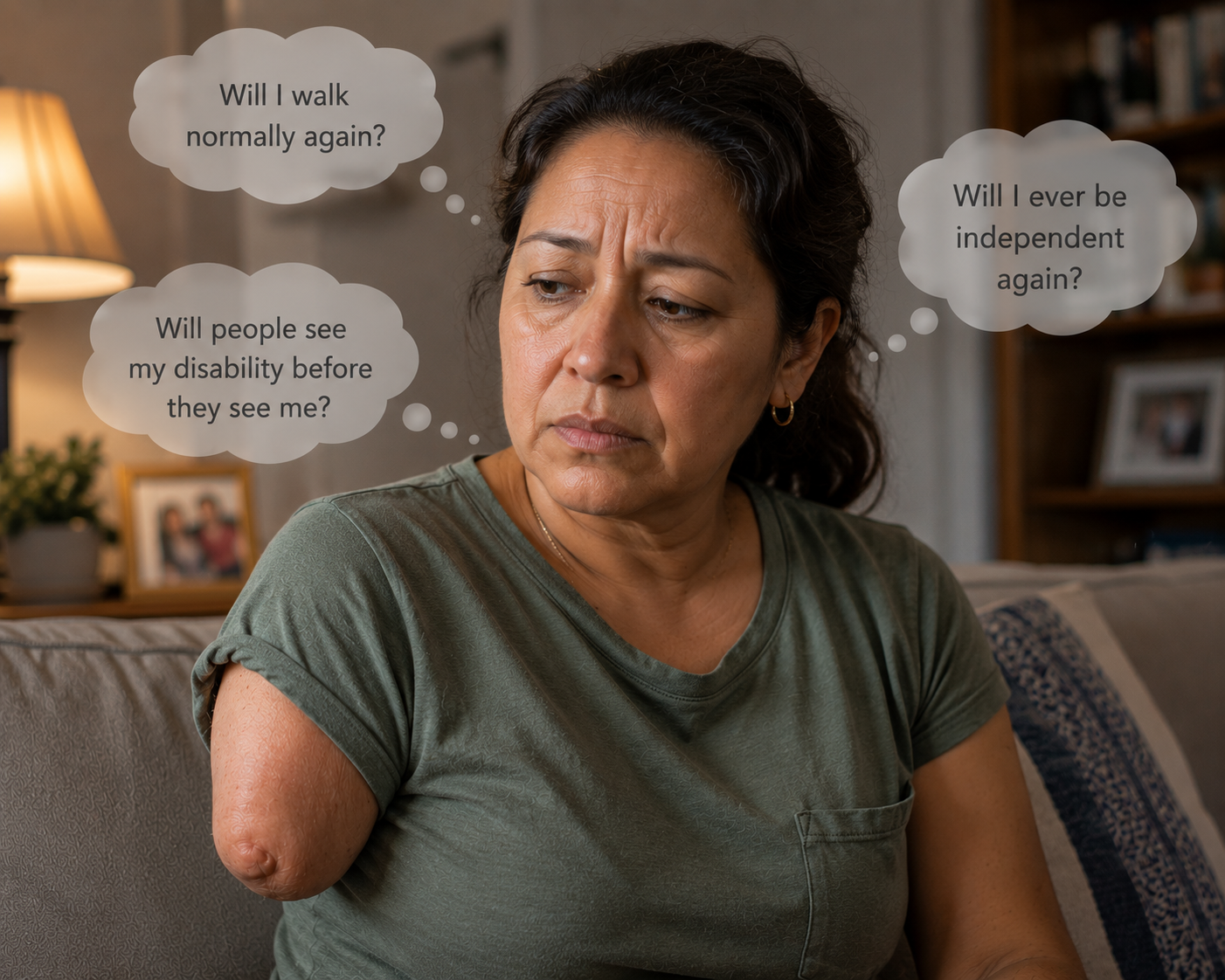
Amputation brings many losses beyond the loss of a limb. You may grieve changes to your career, hobbies, relationships, financial security, body image, or future plans. Even everyday routines such as climbing stairs, driving, showering, or playing with grandchildren may suddenly feel uncertain.
Psychologists often compare this adjustment to other forms of grief because people commonly experience denial, anger, bargaining, sadness, and eventually acceptance. These emotions rarely occur in a straight line. You may feel optimistic one day and overwhelmed the next. Neither experience means you are recovering incorrectly.
Research suggests that approximately one in three people living with limb loss experience clinically significant symptoms of depression, while anxiety, fear of falling, and social isolation are also common. Understanding that these reactions are shared by many people can reduce feelings of guilt and encourage individuals to seek support sooner.
Your Identity Is Bigger Than Your Amputation
One of the greatest emotional challenges after limb loss is protecting your sense of identity. During rehabilitation it can feel as though every conversation revolves around your surgery, your prosthesis, your pain, or your appointments. Eventually it becomes easy to believe that you are now ‘the amputee.’
But before your amputation you were many things—a parent, spouse, friend, professional, volunteer, athlete, musician, traveller, or someone with unique passions and dreams. Those qualities did not disappear when you lost a limb.
Rebuilding your identity means reconnecting with those parts of yourself while also embracing the strength, empathy, and resilience you have gained through your experience.
Stop Comparing Yourself
Comparison is one of the fastest ways to lose confidence. Many people compare themselves to the person they were before amputation, while others compare themselves to social media influencers or athletes who appear to have recovered effortlessly.
What we rarely see is the years of rehabilitation, setbacks, pain, and determination behind those success stories. Every recovery is influenced by age, overall health, cause of amputation, family support, financial resources, access to rehabilitation, and many other factors.
Instead of asking whether you’re as far along as someone else, ask whether you’re stronger than you were last month. Measuring your own progress is far healthier than trying to match someone else’s journey.
Resilience Can Be Learned
Resilience is often mistaken for toughness. In reality, resilience means continuing to adapt despite adversity. It includes asking for help, acknowledging difficult emotions, and continuing to move forward even when progress feels slow.
Research into post-traumatic growth has found that many people eventually discover unexpected positive changes following major life events. These may include stronger relationships, greater appreciation for life, increased confidence, or a renewed sense of purpose. This doesn’t mean people are grateful for their amputation. It means they learn to build something meaningful despite it.
Developing resilience happens through repeated experiences of overcoming challenges. Every new skill you master adds another layer of confidence.
Practical Ways to Move Forward
Acceptance grows through action rather than waiting for motivation to appear. Setting realistic goals, attending rehabilitation appointments, practising with your prosthesis, maintaining healthy routines, and staying socially connected all reinforce progress.
Breaking large goals into smaller milestones makes recovery feel more manageable. Rather than focusing only on walking independently, celebrate learning a transfer, standing safely, preparing a meal, or leaving the house for coffee with a friend. Those achievements build momentum.
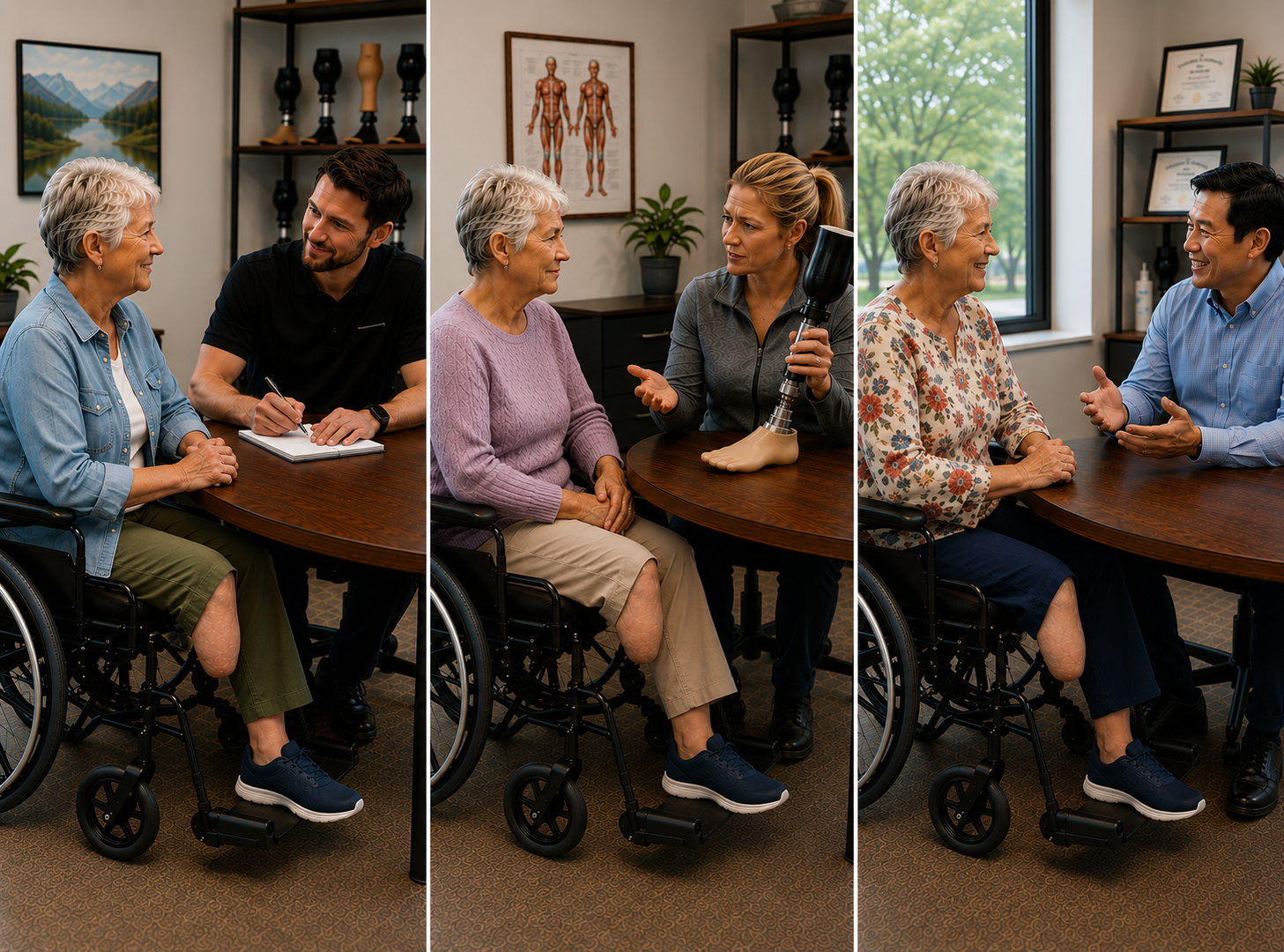
Many people also benefit from counselling, mindfulness, journaling, adaptive recreation, volunteering, and peer support. Emotional recovery deserves the same commitment as physical recovery.
Finding Purpose Again
Purpose gives us a reason to keep moving forward. For some people that purpose is returning to work. For others it is raising children, mentoring others, travelling, volunteering, or pursuing hobbies in new ways.
Following my amputations, creating Limbloss Connection became part of my purpose. I realized there were many people living with limb loss who felt isolated, overwhelmed, and unsure where to turn. Helping others reminded me that even painful experiences can create opportunities to improve someone else’s life.
Purpose rarely appears overnight. It grows through small acts of contribution, curiosity, and connection.
Moving Forward With Confidence
Confidence returns gradually through experience. Every successful transfer, every physiotherapy session, every first outing, and every challenge you overcome teaches your brain that you are capable of more than you believed yesterday.
There will still be setbacks. You may have days when pain increases, your prosthesis doesn’t fit properly, or you feel discouraged. Those moments are part of recovery, not evidence that you are failing.
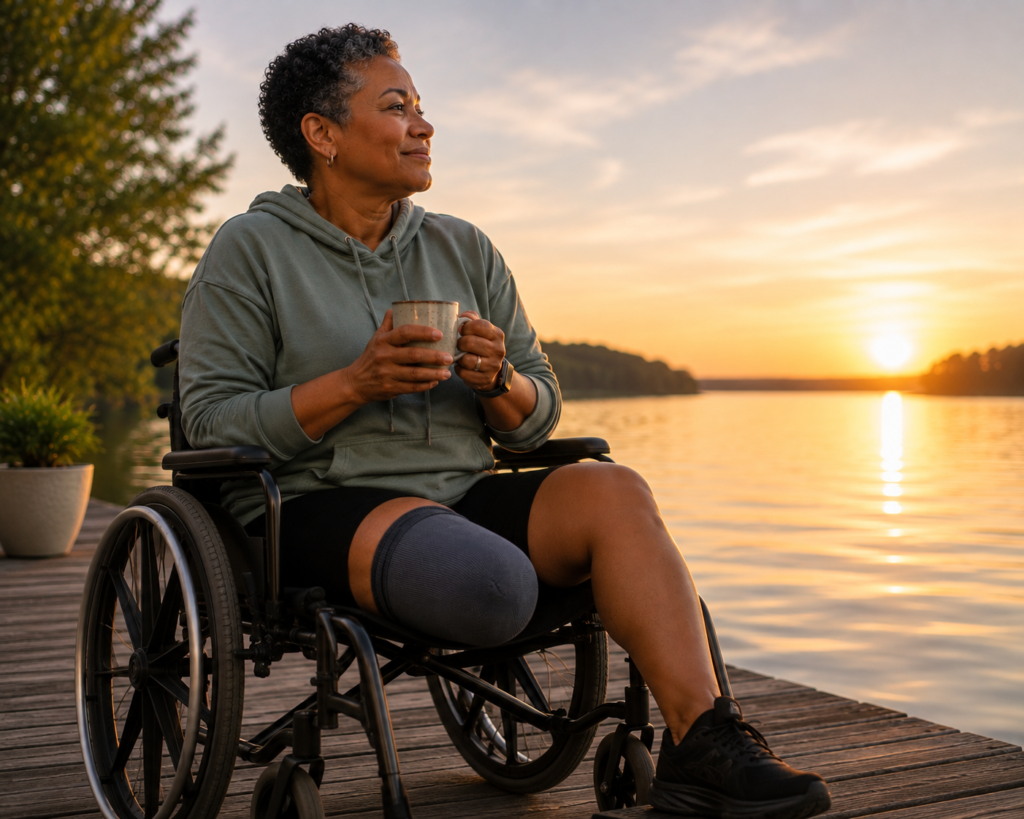
Your new normal may look different than the life you once imagined, but different does not mean worse. Many people discover new friendships, new priorities, and new opportunities they never expected. If you ever feel alone during that journey, remember that communities such as Limbloss Connection exist because none of us should have to navigate limb loss by ourselves.
Key Research Highlights
• Approximately one-third of people living with limb loss experience clinically significant depressive symptoms during recovery.
• Strong social support is consistently associated with better psychosocial adjustment, higher quality of life, and improved rehabilitation outcomes.
• Studies on post-traumatic growth show many individuals develop increased resilience, appreciation for life, and stronger relationships over time.
References
• Coffey L. et al. Psychosocial adjustment following limb amputation.
• Journal of Rehabilitation Medicine.
• Archives of Physical Medicine and Rehabilitation.
• Disability and Rehabilitation.
• Canadian Prosthetics & Orthotics Journal.
• Tedeschi RG & Calhoun LG. Post-Traumatic Growth.