By Kevin Gray
President & Co-Founder, Limbloss Connection
Bilateral Below-Knee Amputee
Fear Is a Normal Part of Recovery
After losing a limb, fear often becomes an unwelcome companion. I remember wondering whether I would ever walk confidently again, whether people would see my disability before they saw me, and whether I would ever regain the independence I once took for granted. Those thoughts were exhausting, but I eventually realized they were also a normal response to a life-changing event.
Our brains are designed to protect us from danger. After an amputation, almost everything feels unfamiliar. Your balance has changed, your body has changed, and your future may feel uncertain. Fear is your brain’s way of encouraging caution while it learns this new reality.
The important thing to remember is that fear and progress can exist together. You do not need to eliminate fear before taking the next step. In fact, confidence usually develops because you continue moving forward despite feeling afraid.
Fear of Falling
For many people with lower-limb limb loss, the fear of falling becomes one of the greatest barriers to recovery. The first transfer from bed to wheelchair, the first shower at home, the first walk with a prosthesis, or even stepping onto uneven ground can create enormous anxiety.
Research suggests that more than half of community-dwelling adults with lower-limb amputation experience at least one fall each year, while approximately half report a significant fear of falling. This fear can lead people to avoid activity altogether, which unfortunately weakens muscles, reduces balance, and often increases the risk of future falls.
The most effective way to overcome this fear is through gradual exposure. Work with your physiotherapist, practise safe transfers repeatedly, use appropriate mobility aids, and slowly introduce more challenging environments. Every successful experience teaches your brain that you are capable and prepared.
Fear That Life Will Never Be the Same
This fear is almost universal. Shortly after amputation it can feel impossible to imagine a meaningful future. Many people wonder whether they will work again, travel again, enjoy hobbies again, or simply feel happy again.
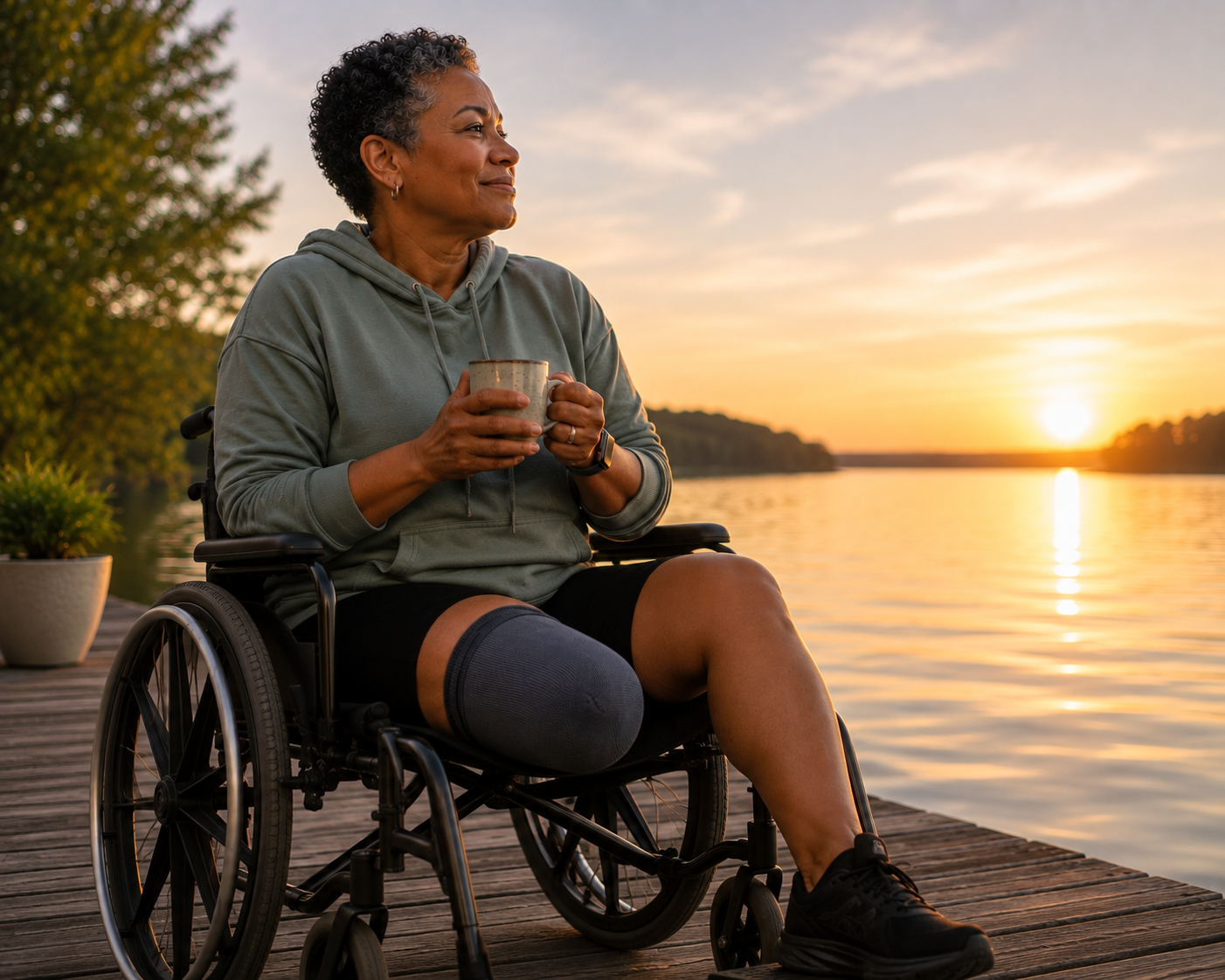
While life rarely returns to exactly what it was before, many people eventually discover that they can build a fulfilling life in new ways. That doesn’t erase grief, but it does create hope. Rehabilitation is not about recreating your old life perfectly. It is about building a different life that still reflects your values, relationships, and goals.
Give yourself permission to grieve what has changed while remaining open to what may still be possible.
Fear of Being Judged
Returning to the community often brings worries about how other people will react. Will people stare? Will children ask questions? Will employers or friends treat me differently? These concerns are understandable because appearance changes can affect confidence and body image.
Most people are curious rather than unkind. Preparing a short, comfortable response to common questions can reduce anxiety. Equally important is recognizing that you are never obligated to explain your medical history to anyone.
Confidence grows through repeated positive experiences. Each trip to the grocery store, restaurant, workplace, or community event reminds you that most interactions are far more ordinary than your fears predicted.
Fear of Becoming a Burden
One of the hardest emotional adjustments is accepting help. Many people who have always been independent struggle with relying on others for transportation, meals, household chores, or personal care.
Temporary dependence during recovery should never be confused with permanent dependence. In fact, accepting appropriate support often accelerates recovery because it allows you to focus your energy on healing rather than exhausting yourself trying to do everything alone.
Family members and friends usually appreciate being given specific tasks. Asking someone to pick up groceries or drive you to physiotherapy provides meaningful ways for them to support your recovery.
Fear of Depression and Isolation
The emotional impact of limb loss is every bit as important as the physical recovery. A 2024 systematic review of 61 studies involving nearly 10,000 participants estimated that 33.9% of people experience clinically significant depression after limb amputation. Anxiety, loneliness, and social withdrawal are also common, particularly during the first year.
Isolation often develops gradually. People decline invitations because mobility is difficult, they become self-conscious about their appearance, or they worry about slowing everyone else down. Unfortunately, isolation can reinforce depression and reduce motivation.
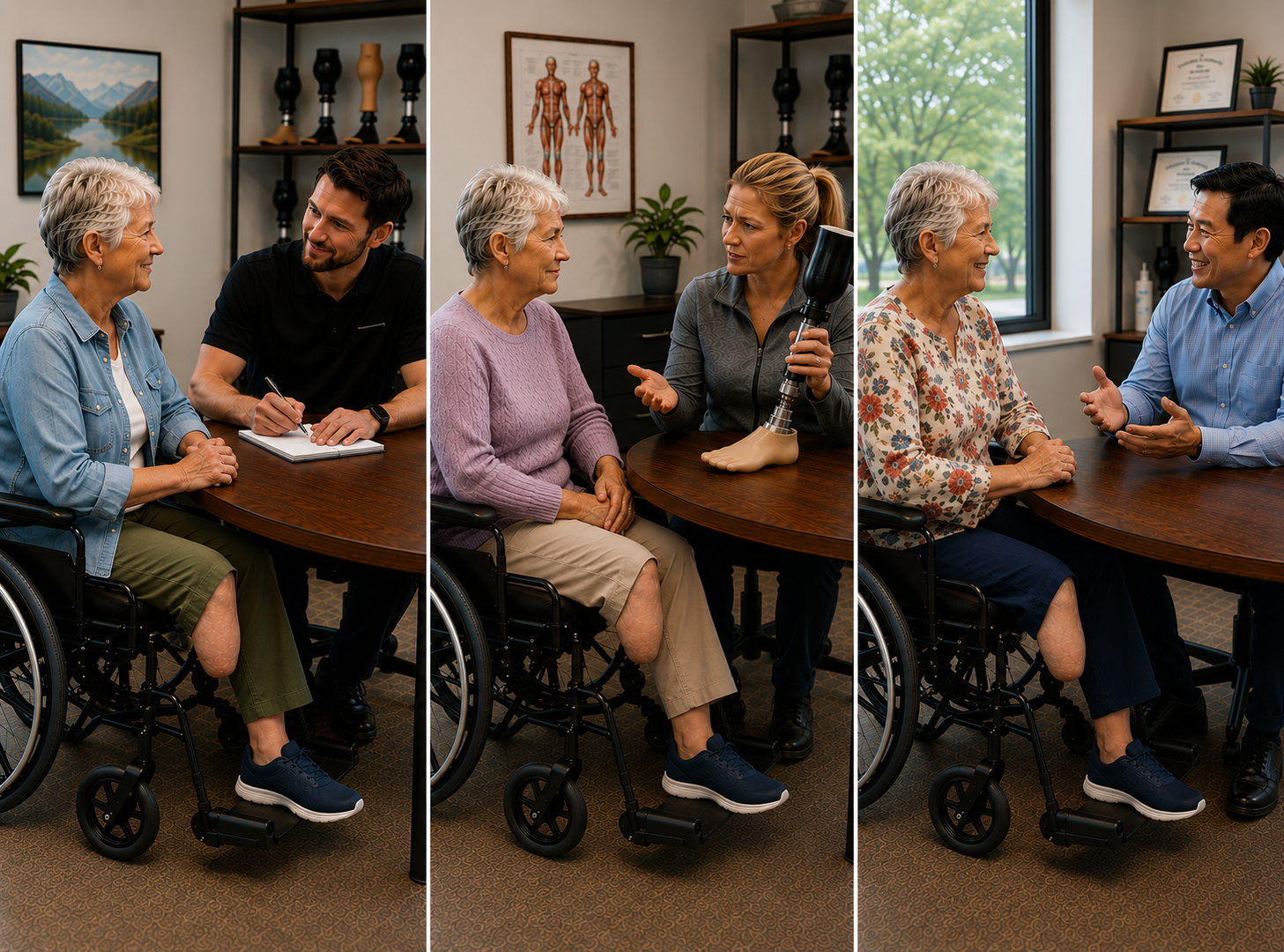
Maintaining regular contact with family, friends, peer supporters, and support groups helps break this cycle. Speaking with a psychologist or counsellor should be viewed no differently than seeing a physiotherapist—it is an investment in recovery.
Turning Fear Into Confidence
Confidence is not something that suddenly appears one morning. It is built through hundreds of small victories. Every transfer, every prosthetic adjustment, every physiotherapy session, every outing, and every conversation with another person living with limb loss contributes to that confidence.
Set realistic goals, celebrate incremental progress, and recognize that setbacks are part of recovery rather than signs of failure. Many people discover that the fears which once dominated their lives gradually become much quieter as experience replaces uncertainty.
The goal is not to become fearless. The goal is to become resilient enough that fear no longer determines the decisions you make.
Key Research Highlights
• A 2024 systematic review (61 studies; 9,852 participants) estimated that 33.9% of people experience clinically significant depression after limb amputation.
• More than 50% of adults with lower-limb amputation report at least one fall annually in community settings.
• Approximately 49% report a persistent fear of falling.
• Strong social support, peer support, and active coping strategies are consistently associated with improved psychological adjustment and quality of life.
References
Singh S, et al. Journal of Psychosomatic Research (2024).
Miller WC, et al. Disability and Rehabilitation.
Journal of Rehabilitation Medicine.
Archives of Physical Medicine and Rehabilitation.
Canadian Prosthetics & Orthotics Journal.