By Kevin Gray
President & Co-Founder, Limbloss Connection
Bilateral Below-Knee Amputee
No One Prepared Me for the Grief
I thought the hardest part of losing my legs would be the surgeries, the pain, or learning how to use prosthetic limbs. I was wrong. The hardest part was grieving. No one really sat down and explained that I was going to mourn the loss of a part of my body in much the same way people grieve the loss of someone they love. At first, I felt guilty for feeling that way because I was alive. My family was grateful I survived, my doctors were pleased with my progress, and everyone around me wanted to focus on the future. Meanwhile, I was quietly trying to make sense of everything that had changed.
It’s Okay to Feel Everything
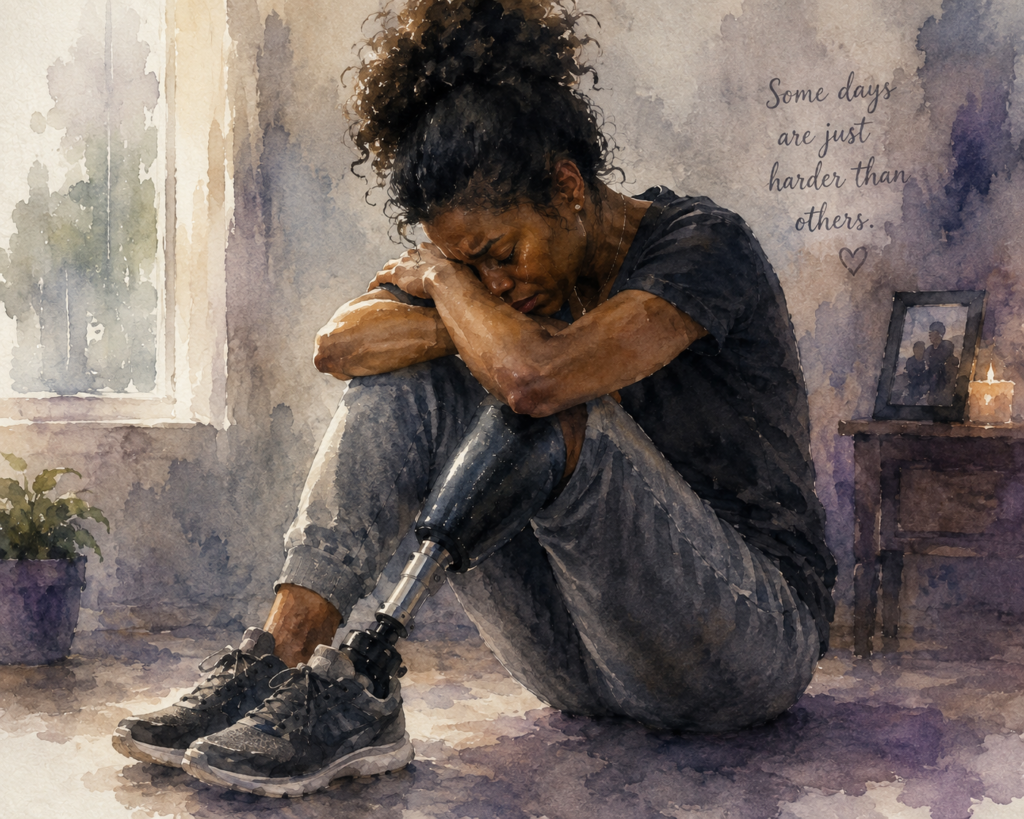
There were days when I felt hopeful and determined, followed by days when I was angry, frustrated, or simply exhausted. Sometimes I was grieving the loss of my legs. Other times I was grieving the loss of the life I thought I was going to have. I missed simple things that most people never think about, like standing in the kitchen to make coffee, going for a walk without planning every step, or deciding to leave the house without wondering if the environment would be accessible. Those emotions often arrived without warning, and I eventually learned that they weren’t signs that I was failing. They were signs that I was healing emotionally.
The Person in the Mirror
One of the most emotional moments came the first time I really looked at myself. It wasn’t about appearance as much as identity. I remember wondering whether I was still the same person. Could I still be the husband, father, grandfather, friend, and professional I had always been? Over time I realized that limb loss had changed my body, but it had not changed my values, my personality, or my ability to contribute to other people’s lives. That realization didn’t happen overnight. It came one conversation, one accomplishment, and one small victory at a time.
Grief Doesn’t Follow a Schedule
I wish I could tell you that grief disappears after a few weeks or months. In my experience, it doesn’t work that way. Even today there are moments that remind me of what I’ve lost. The difference is that those moments no longer control my life. Grief becomes quieter. It slowly makes room for hope, confidence, and gratitude. There is no deadline for emotional healing, so don’t judge yourself if you’re still struggling long after other people think you should have ‘moved on.’
Finding Hope Through Other Amputees
The turning point for me wasn’t a piece of equipment or a medical procedure. It was meeting other people living with limb loss. They understood what I was feeling without me having to explain it. They didn’t tell me to stay positive all the time. Instead, they gave me permission to be honest about my fears while showing me that life could still be meaningful. Their encouragement eventually inspired me to help create Limbloss Connection because I wanted every new amputee to have that same sense of belonging.
A Different Life Can Still Be a Good Life
If you’re grieving today, I want you to know that you don’t need to pretend everything is okay. Give yourself permission to cry, to ask difficult questions, and to feel disappointed about what you’ve lost. At the same time, don’t lose sight of what still lies ahead. One day you’ll catch yourself laughing again. You’ll discover new routines, new goals, and new reasons to be hopeful. You won’t stop missing parts of your old life, but you’ll slowly begin building a life that is every bit as meaningful. Looking back now, I realize I wasn’t just grieving the loss of my legs—I was learning to become a different version of myself. That journey wasn’t easy, but it led me to a purpose I never expected: helping others discover that they are stronger than they believe and that no one has to face limb loss alone.