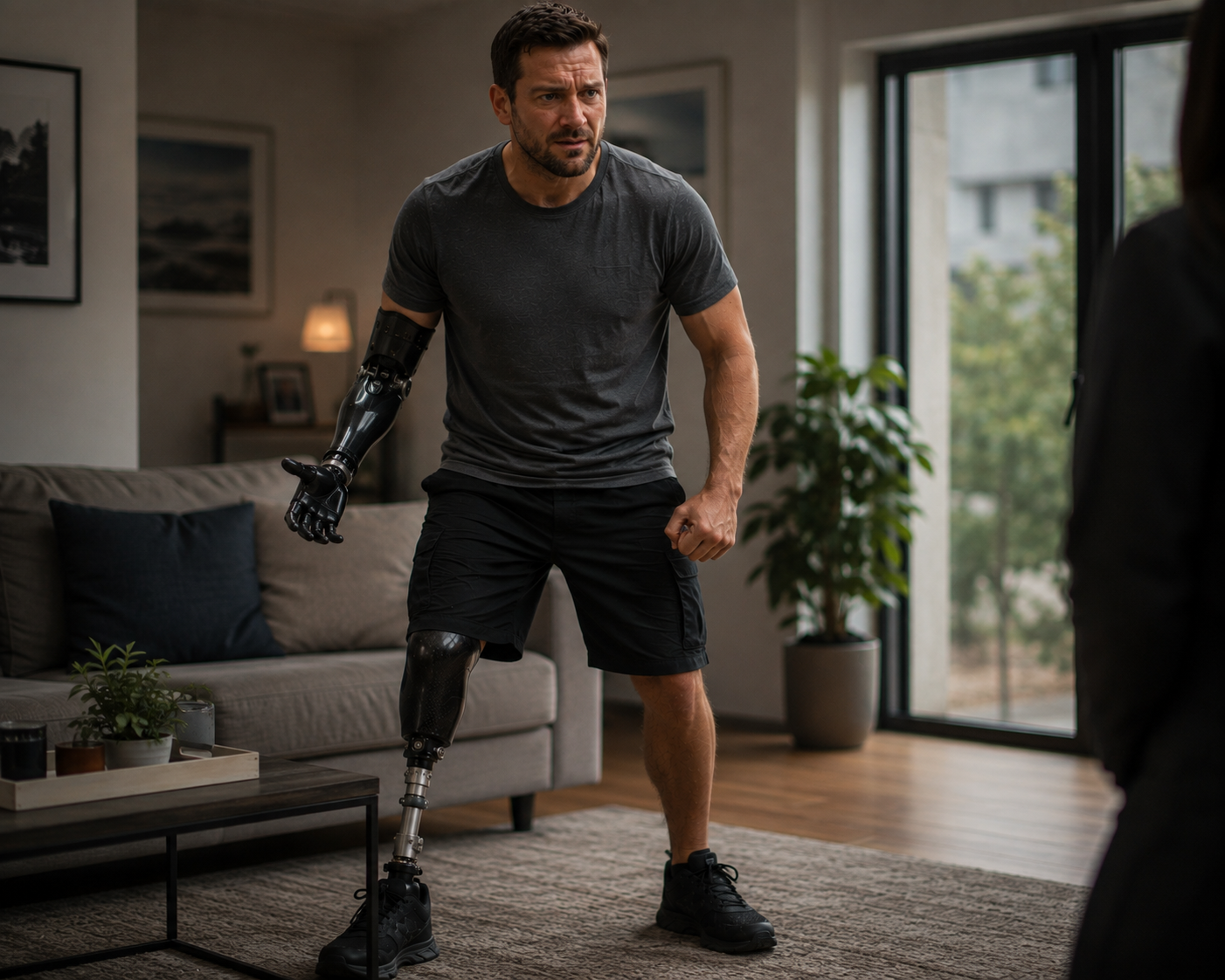
Kevin Gray
President & Co-Founder, Limbloss Connection
Bilateral Below-Knee Amputee
Life Didn’t End—It Changed
I’ll be honest. After losing my legs, I wasn’t thinking about purpose. I was thinking about survival. My days revolved around surgeries, wound care, rehabilitation, dialysis, learning new routines, and trying to make it through one more day. The future seemed impossible to imagine because I was consumed by everything I had lost.
Like many people living with limb loss, I wondered if life would ever feel meaningful again. I questioned whether I would enjoy the things I once loved, whether I would contribute in the same way, and whether people would see me differently. Those thoughts are common, yet many of us keep them to ourselves because we worry they sound selfish or negative. They don’t. They’re part of grieving, and grieving deserves to be acknowledged.
It’s Okay to Talk About Limb Loss
For a while I avoided talking about my amputation. I didn’t want to make other people uncomfortable, and I didn’t want every conversation to revolve around what had happened to me. Eventually I realized something important: talking about limb loss doesn’t mean you’re looking for sympathy. It means you’re processing one of the biggest changes of your life.
Some conversations were emotional. Others were surprisingly uplifting. Every time I spoke honestly about my fears, frustrations, or small victories, I felt a little lighter. I also discovered that people often wanted to ask questions but were afraid of saying the wrong thing. Open, respectful conversations helped all of us move past the awkwardness and focus on what really mattered—living life.
Purpose Doesn’t Arrive Overnight
I used to believe purpose was something you either had or didn’t have. Recovery taught me that purpose is usually rebuilt one small step at a time. At first, my purpose was simply getting out of bed and making it through another therapy session. Later it became walking a little farther, becoming more independent, and encouraging someone else who was struggling.
Purpose often grows quietly. It appears in moments you almost overlook: helping another patient, making your family laugh again, returning to a hobby, volunteering, or discovering a new passion. None of those moments erase limb loss, but together they create a future that feels worth investing in.
Your Story Has Value
One of the greatest surprises of my journey has been realizing that our experiences can help someone else. You don’t have to have all the answers to make a difference. Simply telling someone, ‘I’ve been where you are,’ can provide more hope than you may ever know.
Every person living with limb loss has a unique story. Some lost a limb because of diabetes, trauma, cancer, infection, or congenital limb difference. The details may be different, but many of the emotions are remarkably similar. When we share our stories honestly, we remind one another that setbacks don’t define us and that resilience can be learned.
A Different Life Can Still Be a Good Life
If someone had told me during my darkest days that I would one day find joy, purpose, and fulfillment again, I’m not sure I would have believed them. Looking back now, I realize that my life didn’t return to what it once was—and that’s okay. It became different.
Different doesn’t mean less meaningful. I’ve met extraordinary people, learned lessons I never expected to learn, and discovered strengths I didn’t know I possessed. Limb loss changed the direction of my life, but it didn’t take away my ability to make a difference.
If you’re struggling to see your future today, give yourself grace. Healing takes time. Purpose isn’t something you have to find all at once. It grows with every challenge you overcome, every conversation you have, and every step—literal or figurative—you take forward. Keep talking. Keep asking questions. Keep believing that your best chapters may still be ahead of you.