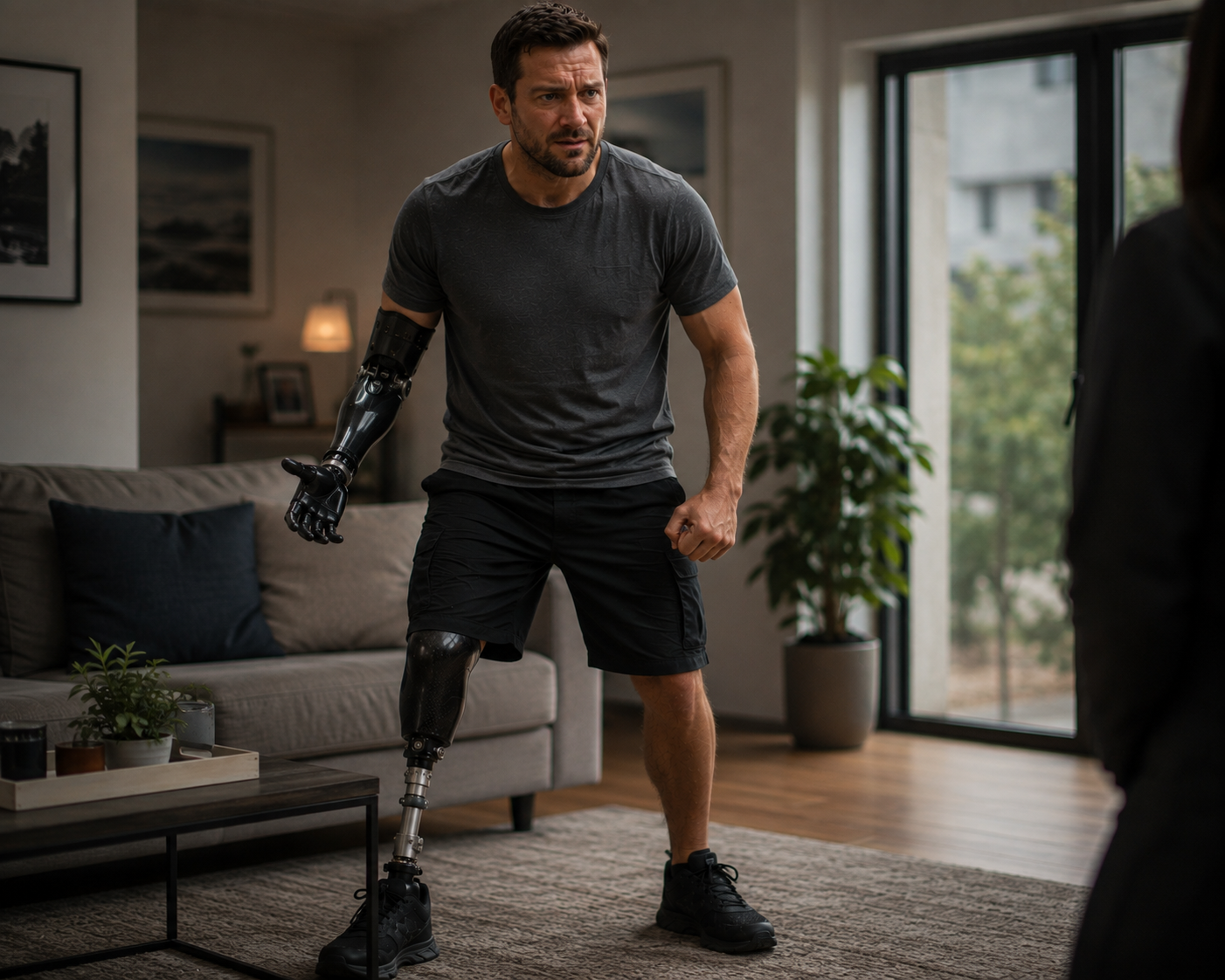
PTSD After a Traumatic Amputation
By Kevin Gray
President & Co-Founder, Limbloss Connection
A traumatic amputation changes far more than the body. For many people, the event itself is terrifying, unexpected, and life-threatening. Long after wounds begin to heal, the brain may continue responding as though the danger is still present. This article explores post-traumatic stress disorder (PTSD), why it develops after a traumatic amputation, how it affects rehabilitation, and the evidence-based treatments that help people recover.
Traumatic Amputation Is Both a Physical and Psychological Injury
Traumatic amputations usually occur without warning following motor vehicle collisions, industrial accidents, farming incidents, military injuries, explosions, or other life-threatening events. During these moments, the brain releases stress hormones such as adrenaline and cortisol that prepare the body to survive. While these responses are essential during the event, they sometimes continue long afterward.
Unlike amputations performed after careful planning for diabetes, vascular disease, or cancer, traumatic amputations often involve fear of death, multiple injuries, emergency surgery, prolonged hospitalization, and intensive care. Research has consistently shown that these circumstances increase the likelihood of PTSD.
Systematic reviews have reported pooled PTSD prevalence of approximately 31% among people with traumatic lower-limb amputations, although individual studies range considerably depending on injury severity, population, and assessment methods. Military populations often report even higher rates because traumatic amputations frequently occur alongside blast injuries and combat exposure.
Understanding PTSD
PTSD is more than remembering a frightening event. It is a disorder in which the brain continues reacting as if the traumatic experience is still happening. People may relive the event through nightmares, intrusive memories, or flashbacks. Others avoid reminders of the accident, withdraw socially, or become emotionally numb.
Many individuals also experience hypervigilance. They constantly scan their surroundings for danger, startle easily, become irritable, and struggle to relax. These symptoms can persist for months or years if left untreated and often interfere with relationships, employment, sleep, and rehabilitation.
Who Is Most at Risk?
Although anyone can develop PTSD, certain factors increase risk. Severe injuries, prolonged hospitalization, multiple surgeries, chronic pain, previous trauma, depression, anxiety, limited social support, and financial stress all contribute.
People who witness fatalities during the accident, believe they were going to die, or spend time in intensive care may also have a higher likelihood of developing PTSD. Studies suggest women generally report PTSD more frequently than men in the general population, although both are significantly affected following major trauma.
How PTSD Affects Rehabilitation
PTSD affects rehabilitation in many different ways. Physiotherapy sessions may trigger memories of the injury. Wearing a prosthesis may remind someone of the accident itself. Hospital environments, medical equipment, or even certain smells may provoke anxiety.
Research has shown that untreated PTSD is associated with reduced participation in rehabilitation, slower functional recovery, increased disability, poorer return-to-work outcomes, and lower quality of life. Emotional recovery is therefore just as important as physical recovery.
The Relationship Between PTSD, Pain, and Sleep
Chronic pain, phantom limb pain, residual limb pain, anxiety, depression, and PTSD often reinforce one another. Poor sleep increases pain sensitivity, while chronic pain increases emotional distress. Many people become trapped in a cycle where pain disrupts sleep, poor sleep worsens anxiety, and anxiety heightens pain perception.
Several studies have demonstrated significant associations between PTSD symptom severity and higher pain intensity among traumatic amputees. Addressing both conditions together generally produces better outcomes than treating either one in isolation.
Evidence-Based Treatments
Fortunately, PTSD is highly treatable. Trauma-focused cognitive behavioural therapy (CBT) remains one of the most effective first-line treatments. Other evidence-supported therapies include Eye Movement Desensitization and Reprocessing (EMDR), Cognitive Processing Therapy (CPT), and Prolonged Exposure Therapy.
For some individuals, medications such as selective serotonin reuptake inhibitors (SSRIs) may reduce anxiety, depression, and intrusive symptoms when combined with psychotherapy. Exercise, structured rehabilitation, mindfulness, relaxation training, and strong social support further improve recovery.
The Importance of Peer Support
Many survivors describe feeling isolated because family and friends cannot fully understand what they experienced. Speaking with another person who has survived a traumatic amputation often provides reassurance that recovery is possible.
Peer support reduces isolation, increases confidence, encourages rehabilitation participation, and helps normalize difficult emotions. Although peer support does not replace professional mental health care, it complements it by providing lived experience and practical hope.
Recovery Is Possible
PTSD is not a sign of weakness, and it is not something that people simply ‘get over.’ It is a recognized medical condition that deserves treatment and compassion. With appropriate care, most people experience meaningful improvement.
Recovery often occurs gradually. The memories may never completely disappear, but they usually become less intrusive and less emotionally overwhelming. Many people living with limb loss eventually return to work, travel, participate in adaptive sports, build families, volunteer, and mentor others. Healing involves both the body and the mind.
At Limbloss Connection, we believe no one should have to recover alone. Professional treatment, family support, rehabilitation, and peer connection together create the strongest foundation for long-term recovery.
Key Statistics
• PTSD prevalence after traumatic lower-limb amputation has been reported at approximately 31% in pooled systematic reviews.
• Many civilian studies report PTSD rates between 20% and 35% following traumatic amputation.
• PTSD is substantially less common after amputations performed for chronic illness than after sudden traumatic injury.
• Depression and anxiety commonly coexist with PTSD, increasing the complexity of rehabilitation.
• Early psychological intervention is associated with improved recovery and greater participation in rehabilitation.
Selected References
• Journal of Traumatic Stress
• Archives of Physical Medicine and Rehabilitation
• Disability and Rehabilitation
• Journal of Rehabilitation Medicine
• Military Medicine
• American Psychiatric Association DSM-5-TR