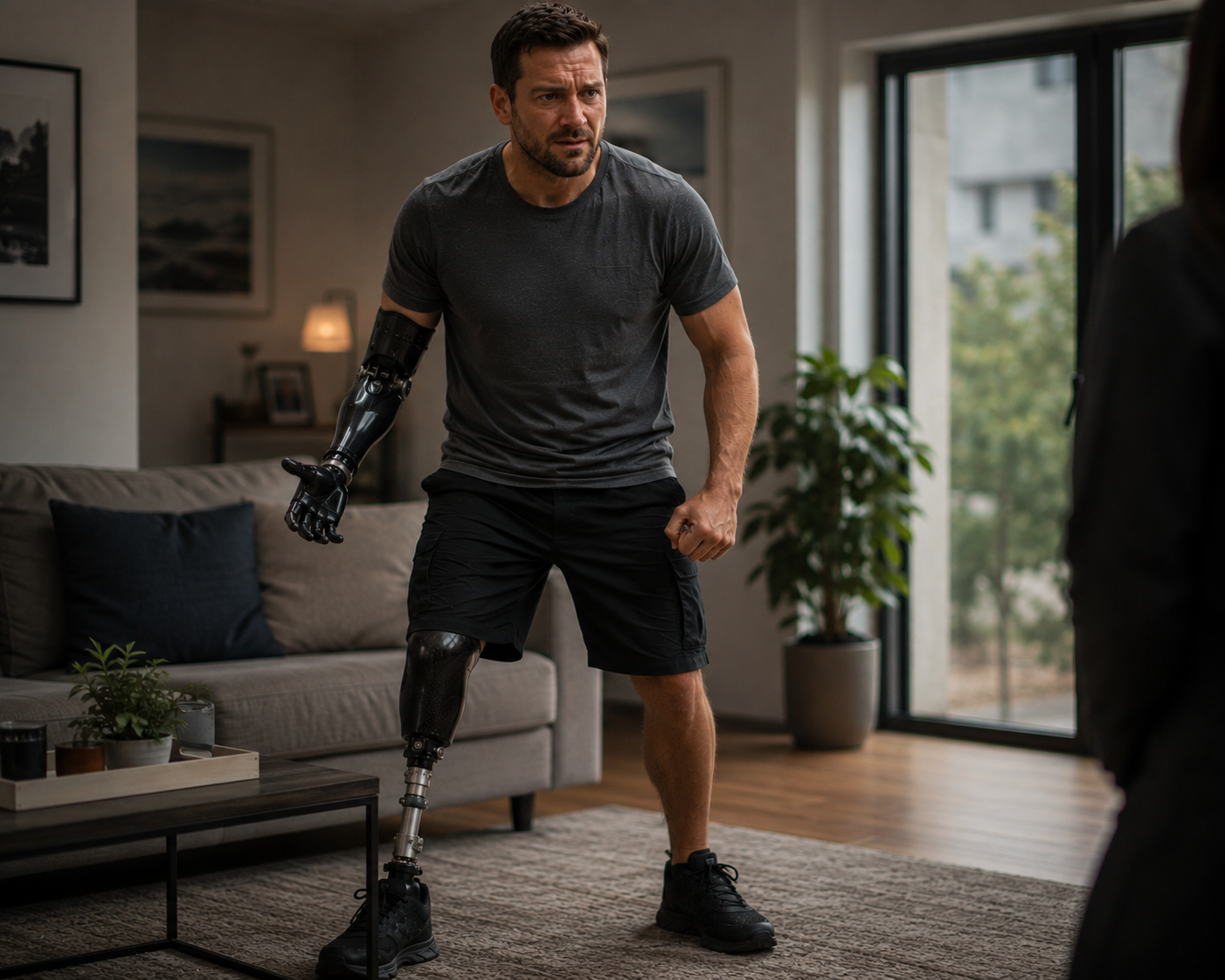
Anxiety and Fear of Falling After Limb Loss
By Kevin Gray
President & Co-Founder, Limbloss Connection
Anxiety and fear of falling are among the most common challenges people experience after limb loss. These emotions affect far more than confidence—they influence rehabilitation, prosthetic use, physical activity, social participation, and overall quality of life. Research consistently shows that fear of falling is common, but it also shows that confidence can be rebuilt through rehabilitation, education, practice, and connection with others who have walked the same path.
Understanding Anxiety After Limb Loss
Anxiety is your body’s natural alarm system. After an amputation, your brain suddenly has to relearn how to balance, judge movement, and respond to situations that once required little thought. Activities such as standing from a chair, getting into the shower, walking across a parking lot, or climbing stairs may suddenly feel risky. Your brain becomes hyper-alert because it is trying to prevent another injury.
This heightened awareness is completely understandable. Many people worry they will fall, damage their residual limb, break a bone, or lose confidence in front of other people. These thoughts can become so persistent that they begin affecting sleep, concentration, motivation, and willingness to participate in rehabilitation.
Research suggests that clinically significant anxiety affects approximately 20–35% of people following limb amputation. Anxiety frequently occurs alongside depression, chronic pain, phantom limb pain, and sleep disturbances, creating a cycle that can slow recovery if left unaddressed.
Why Fear of Falling Is So Common
Fear of falling is one of the most frequently reported concerns among people living with lower-limb limb loss. Studies have found that approximately 45–50% of individuals report a significant fear of falling, while more than half experience at least one fall each year after returning to community living.
Several factors contribute to this fear. Balance changes after amputation, muscles become weaker during recovery, prosthetic users must learn an entirely new walking pattern, and people with diabetes or vascular disease may also have neuropathy, reduced vision, or other health conditions that increase fall risk.
Importantly, fear of falling is not limited to new amputees. Even experienced prosthetic users may become anxious after a fall, after receiving a new prosthesis, or when walking in unfamiliar environments such as airports, shopping centres, snowy sidewalks, or uneven trails.
The Physical and Emotional Cost of Fear
Fear changes behaviour. Many people begin walking less, decline invitations, avoid restaurants, shopping, vacations, or community events because they worry about falling. Over time this reduction in activity leads to weaker muscles, poorer endurance, declining balance, and reduced confidence.
Researchers consistently report that fear of falling is associated with lower prosthesis use, decreased community participation, poorer functional mobility, and lower quality of life. In other words, fear itself can become one of the greatest barriers to independence.
The emotional consequences can be equally significant. People often describe embarrassment, frustration, isolation, and a loss of self-confidence. Some begin questioning whether they will ever regain the independence they once enjoyed.
Breaking the Cycle
The encouraging news is that confidence can be rebuilt. Rehabilitation professionals often describe recovery as a gradual process of replacing fear with successful experiences. Every safe transfer, every walk across a room, every successful trip outside, and every new skill mastered teaches your brain that movement can once again be safe.
Rather than avoiding situations that feel uncomfortable, gradual exposure is usually recommended. Practising in controlled environments with the support of physiotherapists allows confidence to grow while reducing unnecessary risk.
Small victories matter. Walking to the mailbox, climbing a single flight of stairs, or visiting a local coffee shop may seem like simple accomplishments, but each one strengthens both physical ability and emotional resilience.
Practical Strategies That Research Supports
Evidence-based rehabilitation includes balance training, strengthening exercises, gait training, flexibility, cardiovascular conditioning, and education about fall prevention. Strong hip and core muscles improve stability, while repeated gait practice improves automatic balance reactions.
Psychological strategies are equally important. Cognitive behavioural therapy (CBT), mindfulness, breathing exercises, and relaxation techniques help people recognize fearful thoughts without allowing those thoughts to control their actions. Studies show that combining physical rehabilitation with psychological support produces better outcomes than addressing either challenge alone.
Peer support also plays an important role. Speaking with someone who has successfully returned to work, travelled, or resumed favourite activities after limb loss provides hope that recovery is possible.
When to Ask for Help
Occasional anxiety is expected during rehabilitation. However, professional support should be sought if anxiety prevents you from leaving your home, participating in physiotherapy, wearing your prosthesis, sleeping well, or enjoying relationships. Panic attacks, persistent worry, or overwhelming fear deserve the same attention as any other medical condition.
Your rehabilitation physician, family physician, psychologist, physiotherapist, prosthetist, occupational therapist, and peer support network each play an important role. Anxiety is highly treatable, and asking for help is a sign that you are committed to your recovery.
Looking Ahead With Confidence
Recovery is rarely perfect. Most people experience setbacks, unexpected challenges, and even occasional falls. Those experiences do not erase the progress you have made. Instead, they become opportunities to learn new strategies and strengthen your confidence.
At Limbloss Connection we regularly meet people who once believed they would never walk confidently again. Today they travel, volunteer, work, play adaptive sports, and mentor others beginning the same journey. Their stories remind us that confidence is rarely something we discover—it is something we build one step at a time through perseverance, support, and experience.
Key Research Highlights
• Approximately 45–50% of people with lower-limb amputation report a significant fear of falling.
• More than 50% experience at least one fall each year after returning to community living.
• Anxiety symptoms occur in approximately 20–35% of people following amputation.
• Fear of falling is associated with lower prosthesis use, decreased physical activity, reduced community participation, and poorer quality of life.
• Targeted balance training, gait rehabilitation, cognitive behavioural therapy, and peer support all improve confidence and reduce fear.
References
Miller WC, et al. Disability and Rehabilitation.
Journal of Rehabilitation Medicine.
Archives of Physical Medicine and Rehabilitation.
Canadian Prosthetics & Orthotics Journal.
Journal of Psychosomatic Research.