Residual limb volume is not fixed. It can change during the months after amputation, from one day to another, and even over the course of a single day. These changes are normal, but they can have a major effect on how a prosthetic socket fits and feels.
A socket that fits comfortably in the morning may feel loose later in the day. At another time, the residual limb may be slightly larger and the socket may feel unusually tight. Learning to recognize these changes and respond appropriately is an important skill for anyone who uses a prosthesis.
Good volume management can improve comfort, suspension, control of the prosthesis, and skin protection. Poor volume management can contribute to pressure, rubbing, instability, pain, and skin breakdown.
What Does Residual Limb Volume Mean?

Example of a healed residual limb. Residual-limb size and shape can change over time.
Residual limb volume refers to the size and shape of the portion of the limb remaining after amputation. The tissues inside the residual limb contain muscle, fat, connective tissue, blood vessels, and fluid. Changes in these tissues—particularly fluid—can change the overall size of the limb.
Even a relatively small volume change can affect socket fit because a prosthetic socket is made to closely match the shape of the residual limb.
Why Does Residual Limb Volume Change?
There are several reasons the residual limb can become larger or smaller.
● Postoperative swelling gradually decreases as the limb heals.
● Muscles may change in size after amputation.
● Body weight gain or loss can affect socket fit.
● Fluid can shift in and out of the tissues during the day.
● Walking and prosthetic use can temporarily reduce fluid in the residual limb.
● Changes in activity can affect limb volume.
● Heat can contribute to swelling for some people.
● Long periods of sitting or inactivity may affect fluid distribution.
● Changes in overall health can sometimes influence swelling.
The pattern is different for every person. The important skill is learning what is typical for your own residual limb.
The First Year Can Bring Significant Changes
Residual limbs often change considerably during the first months after amputation. Early swelling decreases, tissues mature, muscles change, and the shape of the limb may become more stable.
This is one reason a first prosthetic socket may not last as long as later sockets. A socket that fitted correctly during early rehabilitation can eventually become too large even when nothing is wrong with the socket itself.
Regular communication with your prosthetist is particularly important during this period.
How Volume Loss Affects Socket Fit
When the residual limb becomes smaller, it may sit deeper inside the socket or move more than intended.
Possible signs include:
● The socket feels loose.
● The prosthesis seems to move up and down on the limb.
● You feel increased pressure at the end of the residual limb.
● The prosthesis feels less stable.
● You notice rubbing or friction.
● The prosthesis may feel shorter because the limb is sitting deeper in the socket.
● Control of the prosthesis feels different.
● You need more prosthetic sock ply than usual.
Repeated movement between the limb and socket can increase friction and skin irritation.
How Increased Volume Affects Socket Fit
When the residual limb becomes larger, getting fully into the socket can become difficult.
Possible signs include:
● The socket feels unusually tight.
● You cannot get the residual limb fully into the socket.
● A locking pin does not engage as easily as usual.
● Pressure develops in areas that are normally comfortable.
● The prosthesis may feel too long because the limb is not fully seated.
● Skin redness increases.
● The limb feels compressed or uncomfortable.
Do not force the residual limb into a socket when the fit has changed significantly. If the problem does not resolve or you are unsure what to do, contact your prosthetist.
Prosthetic Socks and Sock Ply
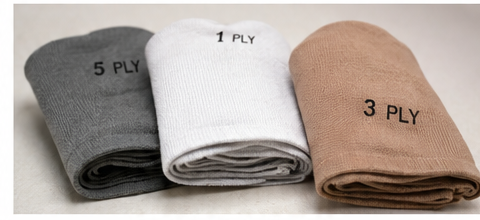
Examples of prosthetic socks in different ply thicknesses.
Prosthetic socks are one of the most common tools for managing a residual limb that has become smaller within the socket.
Socks are available in different thicknesses, often described as ply. Depending on the system, a user may add or remove sock ply to compensate for volume changes.
For example, someone may begin the day with fewer socks and add additional ply later if the limb loses volume and the socket becomes loose.
The exact combination should be based on the prosthetic system and the instructions provided by the prosthetist.
Adding too many socks can create a different problem by changing how the residual limb sits inside the socket and increasing pressure in inappropriate areas.
Sock Ply Is Not a Permanent Fix for a Poorly Fitting Socket
Prosthetic socks are extremely useful, but there is a limit to what they can correct.
If you repeatedly require a large amount of sock ply, the socket may have become too large. At that point, adding more socks may not restore proper pressure distribution or control.
Talk with your prosthetist if your sock requirements have changed substantially or if you are continually adding more socks to remain comfortable.
Liners and Volume Changes
Many prosthetic systems use silicone, gel, or other roll-on liners. Liners provide cushioning, reduce friction, and may form part of the suspension system.
Depending on the socket design, prosthetic socks may be worn over the liner to compensate for volume loss.
Liners also come in different thicknesses, but changing liner thickness should not be done casually because it can significantly change socket fit. Discuss changes with your prosthetist.
Shrinkers and Compression
A shrinker is an elastic compression garment designed for a residual limb. It is commonly used after amputation to help manage swelling and shape the limb before or between stages of prosthetic fitting.
Some people may also be instructed to use a shrinker when they are not wearing their prosthesis.
A shrinker should fit correctly and be used according to the instructions of the rehabilitation or prosthetic team. Wrinkles, folds, or an incorrectly sized shrinker can create excessive pressure.
Compression Wrapping
Elastic bandaging may sometimes be used during early rehabilitation to help manage swelling and shape the residual limb.
Proper wrapping technique is important. Uneven or excessive compression can create pressure problems and may actually interfere with shaping.
If compression wrapping is recommended, ask a physiotherapist, occupational therapist, nurse, or other qualified member of the rehabilitation team to demonstrate the technique and check that you are doing it correctly.
Elevated Vacuum and Volume Management
Some prosthetic systems use elevated vacuum suspension. A pump removes air from between the liner and socket, helping maintain close contact between the residual limb and socket.
Elevated vacuum may help some users maintain more consistent socket contact and may reduce volume fluctuations in certain situations. It is not appropriate for everyone, and the system must maintain an effective seal.
Ask your prosthetist whether vacuum suspension is appropriate for your residual limb, activity level, skin condition, and lifestyle.
Your Volume Can Change During the Day

Example of adding sock ply as residual-limb volume decreases and the socket becomes looser.
Many prosthesis users develop a predictable daily pattern.
For example, the residual limb may be fuller when the prosthesis is first put on and gradually lose some volume after several hours of standing and walking.
Other people experience different patterns.
Learning your pattern can help you anticipate when sock adjustments may be needed rather than waiting until the socket becomes painful or unstable.
Develop a Routine
A simple daily routine can help you recognize changes early.
● Check your residual limb before putting on the prosthesis.
● Notice how easily the limb enters the socket.
● Pay attention to how deeply you are sitting in the socket.
● Check whether the suspension system is engaging normally.
● Notice changes in pressure while standing and walking.
● Reassess the fit during the day.
● Carry appropriate prosthetic socks if your system uses them.
● Inspect your skin whenever you remove the prosthesis.
Over time, these checks often become automatic.
Skin Checks Are Essential
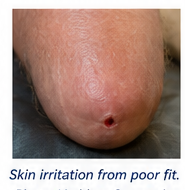
Skin irritation can be a sign that socket fit or pressure distribution needs attention.
Changes in volume change where pressure is applied inside the socket. That means a volume problem can quickly become a skin problem.
Inspect the residual limb for:
● Redness
● Blisters
● Cuts or abrasions
● Open areas
● Bruising
● Unusual swelling
● Drainage
● Areas of unusual warmth
● Changes in skin colour
A mirror can help inspect areas that are difficult to see.
Persistent redness, repeated skin irritation, blisters, open wounds, drainage, or increasing pain should be discussed with the appropriate healthcare professional or prosthetist. People with reduced sensation need to be especially careful because significant skin damage can occur without strong pain signals.
Body Weight Changes Matter
Weight gain or weight loss can change the size and shape of the residual limb and other parts of the body involved in prosthetic fit.
A socket cannot always accommodate substantial weight changes simply by adding or removing socks.
If your weight changes significantly and the socket begins to fit differently, tell your prosthetist.
Heat, Activity, and Travel
Daily circumstances can influence residual-limb volume.
Hot weather, long periods of sitting, changes in activity, long travel days, and changes in routine may affect how the limb feels inside the socket.
When travelling, carry the supplies you normally use to manage fit, including appropriate prosthetic socks when applicable. Do not assume that the same sock combination will work for an entire day.
Diet, Salt, and Hydration
Overall fluid balance can influence swelling, but people should not make major changes to fluid or salt intake simply to change prosthetic fit.
Fluid and sodium recommendations can be especially important for people with heart, kidney, liver, or other medical conditions. Follow the advice of your healthcare team rather than attempting to manipulate fluid intake for socket fit.
If you notice a sudden or unexplained change in swelling, particularly if it is accompanied by other symptoms, seek medical advice.
When the Socket Needs Adjustment
Not every volume problem can be solved at home.
Your prosthetist may be able to modify the socket by adding pads, adjusting components, changing the interface, modifying suspension, or making other alterations.
Contact your prosthetist when:
● Your usual sock adjustments no longer restore a comfortable fit.
● You repeatedly require substantially more sock ply.
● The socket remains painfully tight.
● You cannot fully seat the residual limb in the socket.
● You develop recurring pressure areas.
● The prosthesis moves excessively despite appropriate volume management.
● Your suspension system is no longer working reliably.
● Your walking pattern or prosthetic control changes significantly.
When a New Socket May Be Needed

A replacement socket may be needed when volume changes can no longer be managed effectively with routine adjustments.
Eventually, residual-limb changes can become too large for socket modifications to manage effectively.
A replacement socket may be needed when the existing socket can no longer provide appropriate contact, suspension, comfort, or control.
Needing another socket does not mean that you did something wrong. Residual limbs and bodies change over time, and prosthetic care needs to adapt.
Do Not Modify the Socket Yourself
It can be tempting to add homemade padding, cut material away, heat the socket, or make other changes when something hurts.
These changes can alter pressure distribution and alignment in ways that are difficult to predict.
Temporary strategies should only be used when they have been recommended for your particular prosthetic system. Structural socket modifications should be handled by a prosthetist.
Keep a Volume and Sock-Ply Record
If your residual limb changes frequently, a simple record can help identify patterns.
You might record:
● Time of day
● Sock ply used
● How the socket felt
● How long the prosthesis had been worn
● Activity level
● Any skin redness or pressure
● Whether the limb felt larger or smaller than usual
This information can also be useful when discussing fit problems with your prosthetist.
Questions to Ask Your Prosthetist
About Your Normal Volume Pattern
● How much volume change should I expect?
● How will I know when my limb has lost volume?
● How will I know when the limb is too swollen for the socket?
● What should a properly seated residual limb feel like?
About Prosthetic Socks
● Should I use prosthetic socks with my suspension system?
● Where should the socks be worn in relation to my liner?
● How much sock ply is reasonable?
● At what point should I call you instead of adding more socks?
● Should I carry different sock thicknesses with me?
About Compression
● Should I wear a shrinker when the prosthesis is off?
● How long should I wear it?
● What size and type should I use?
● Should I use compression at night?
About Socket Fit
● What signs indicate that my socket needs adjustment?
● When would you consider adding pads or modifying the socket?
● How will I know when I need a replacement socket?
● Would a different suspension system help manage my volume changes?
Warning Signs That Need More Attention
A gradual and familiar change in socket fit is different from sudden or unexplained swelling.
Seek appropriate medical advice for significant new swelling, particularly when it is associated with unusual redness, warmth, drainage, fever, increasing pain, a new wound, or other concerning symptoms.
Do not assume every change in residual-limb size is simply a prosthetic problem.
Volume Management Becomes a Skill
At first, residual-limb volume management can feel complicated. You may find yourself constantly wondering whether the socket is too tight, too loose, or whether you should add another sock.
With experience, many prosthesis users become very good at recognizing small changes.
You begin to know how the socket should feel when you first stand. You notice when the limb is sitting slightly deeper. You recognize the pressure that means a sock adjustment may be needed. You learn which changes are normal and which ones require your prosthetist.
That knowledge is an important part of becoming confident with a prosthesis.
Learning From Other People Living With Limb Loss
Prosthetists and rehabilitation professionals should guide decisions about socket fit, compression, suspension, and volume-management techniques. Peer support can add practical everyday experience.
Other prosthesis users can share how they carry socks, manage changes during long days, recognize a loose socket, prepare for travel, and communicate fit problems to their prosthetist.
Limbloss Connection provides opportunities for people living with limb loss and limb difference to connect, exchange experiences, and learn from one another.
Peer experience should complement professional prosthetic and medical advice rather than replace it.
The Goal Is a Consistent, Comfortable Fit
Residual-limb volume will change. The objective is not to prevent every small fluctuation but to understand those changes well enough to maintain a safe and comfortable prosthetic fit.
Prosthetic socks, liners, compression garments, suspension systems, socket adjustments, and sometimes replacement sockets can all play a role.
The most important habits are paying attention to fit, checking your skin, making only the adjustments you have been taught to make, and contacting your prosthetist when your normal strategies are no longer working.
Learning to manage residual-limb volume may seem like a small part of prosthetic care, but it can make a major difference in comfort, mobility, skin health, and confidence.
Image note: Photographs are illustrative examples. Residual limbs, skin conditions, sockets, and prosthetic systems vary from person to person.