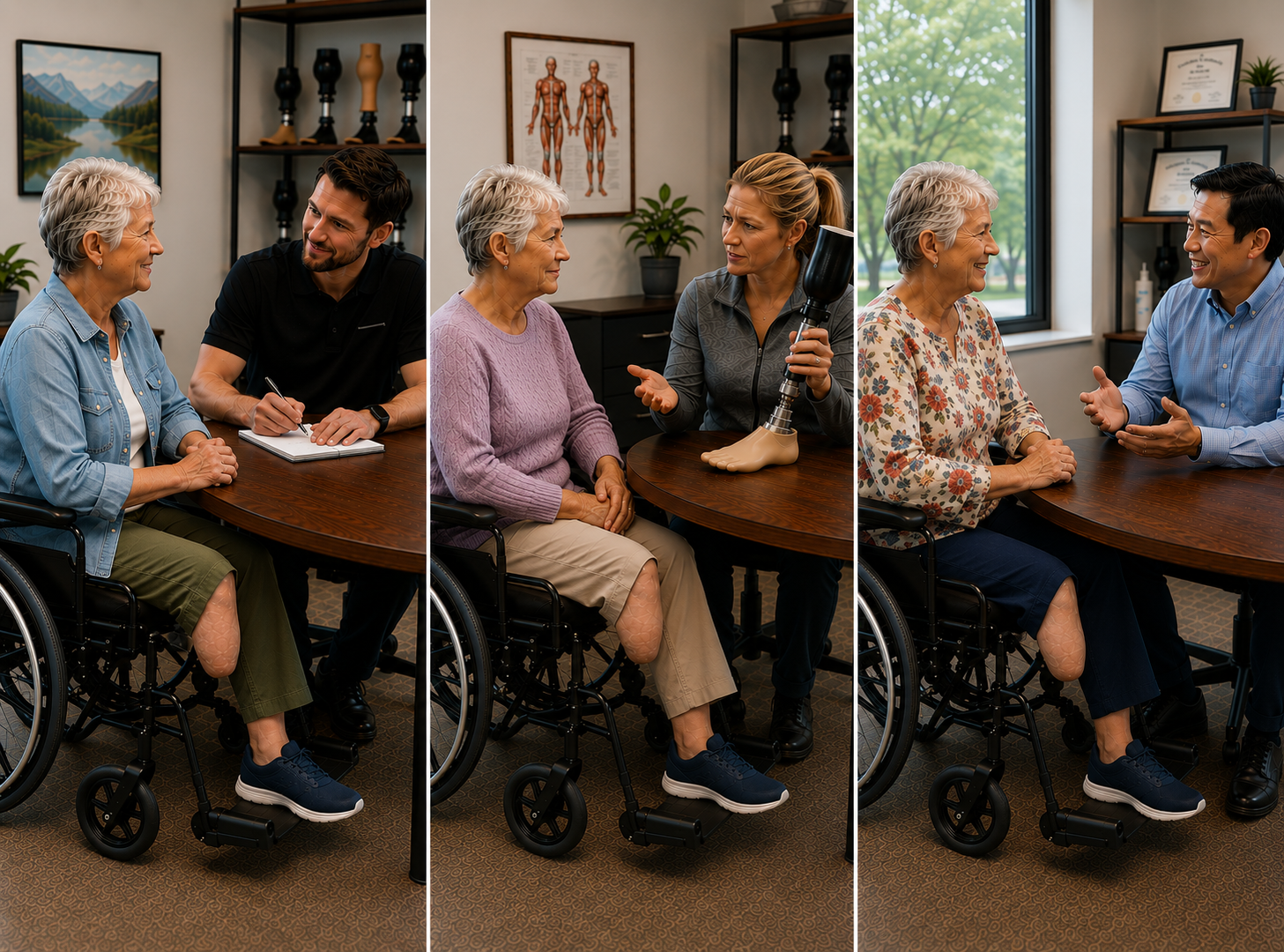
Losing a limb is a life-changing experience. Whether your amputation was planned or the result of an accident, illness, or infection, the days and weeks that follow can feel overwhelming. There are countless appointments, unfamiliar medical terms, and important decisions to make, all while you are coping with the physical and emotional impact of your surgery.
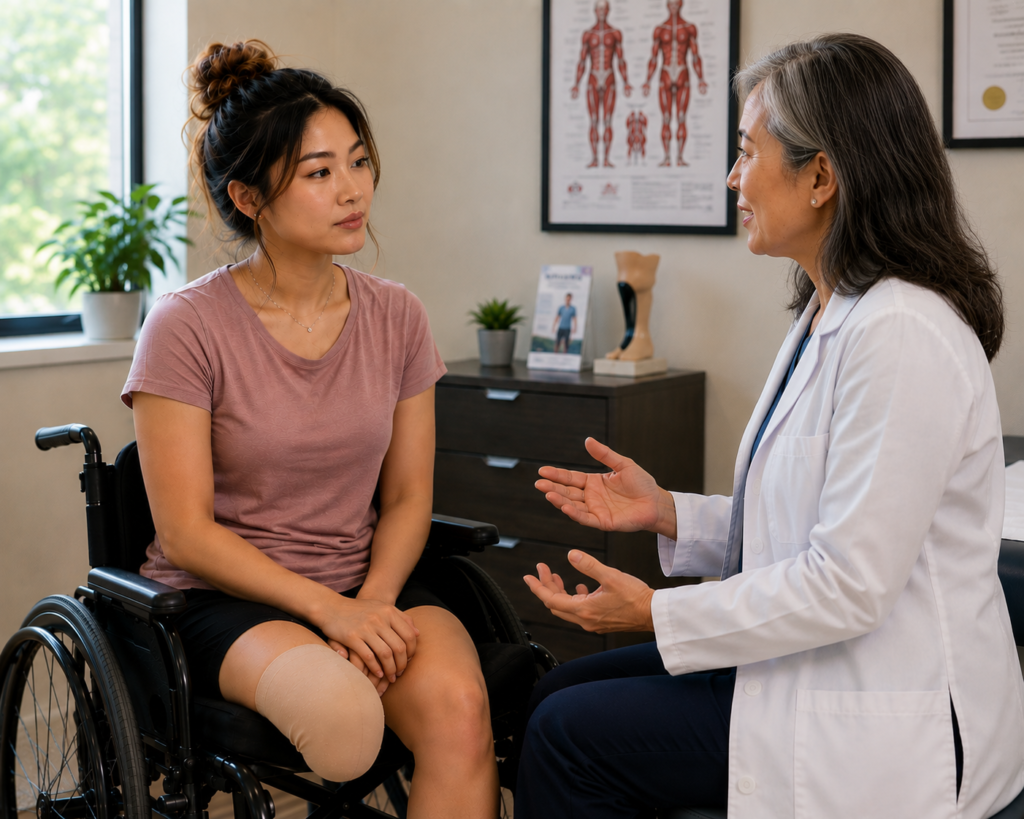
One of the most important things you can do during this time is become an active participant in your care. Asking questions helps you better understand your recovery, make informed decisions, and ensure you receive the support you need. No question is too small, and if you don’t understand an answer, ask your healthcare team to explain it in a different way.
What should I expect during my recovery?
Recovery looks different for everyone. Ask about healing timelines, swelling, milestones, and what is normal for your situation.
How do I properly care for my residual limb?
Learn how to clean your limb, protect your skin, recognize infection, and perform daily skin checks.
What pain is normal?
Ask about incisional pain, phantom sensations, phantom limb pain, treatment options, and when to seek medical attention.
Will I be able to use a prosthesis?
Discuss whether you are a candidate, when fitting may begin, available options, and what to expect.
What can I do now to improve my future mobility?
Ask about exercises, strengthening, flexibility, balance, and preventing contractures.
What warning signs should I watch for?
Know the symptoms of infection or complications and when to call your healthcare provider.
How can I prevent falls?
Learn safe transfers, mobility techniques, and home safety recommendations.
Who will be part of my rehabilitation team?
Understand the roles of surgeons, physiatrists, therapists, prosthetists, nurses, psychologists, and social workers.
How will limb loss affect my mental health?
Discuss emotional recovery, counselling, peer support, and mental health resources.
Are there financial assistance programs available?
Ask about prosthetic funding, equipment, disability benefits, and community resources.
When can I return to everyday activities?
Talk about driving, work, exercise, travel, and hobbies based on your recovery.
Where can I find support from others living with limb loss?
Peer support can provide practical advice, hope, and encouragement. Organizations like Limbloss Connection offer support groups, peer support, resources, and community connections.
You Don’t Have to Know Everything Today
Keep a notebook of questions for appointments, bring someone with you if possible, and remember that asking questions is one of the best ways to advocate for your health. Recovery is a journey, and you do not have to face it alone.