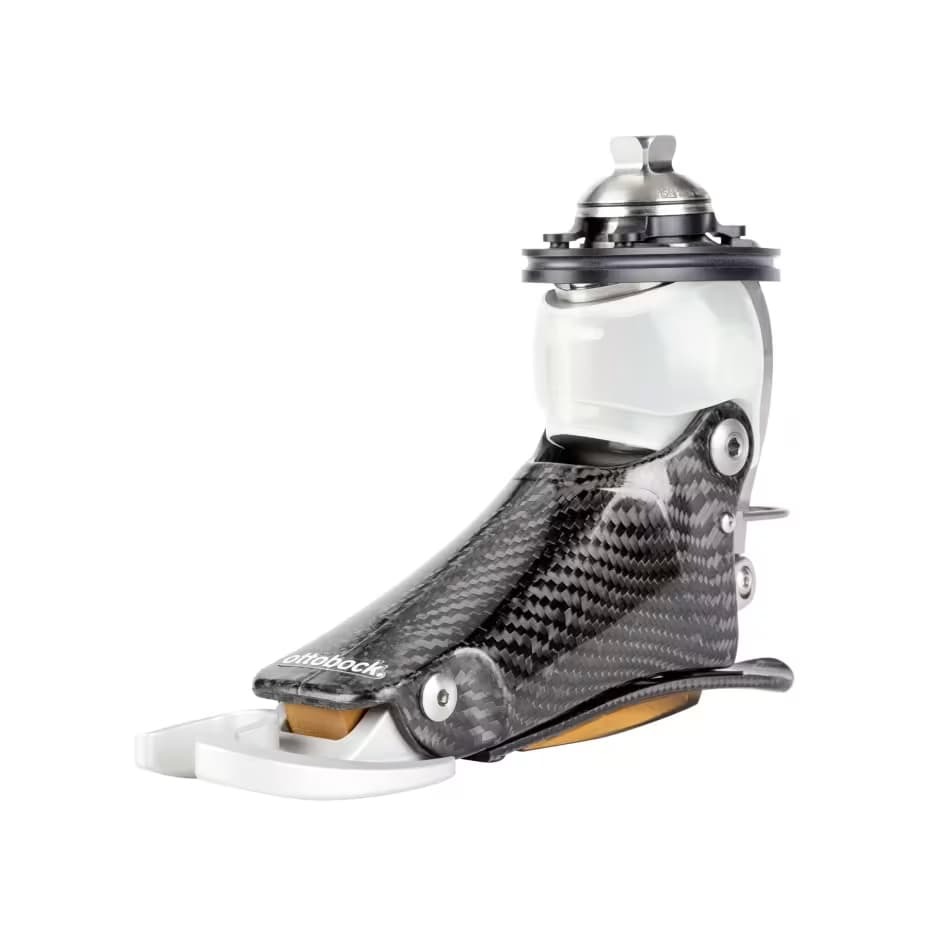
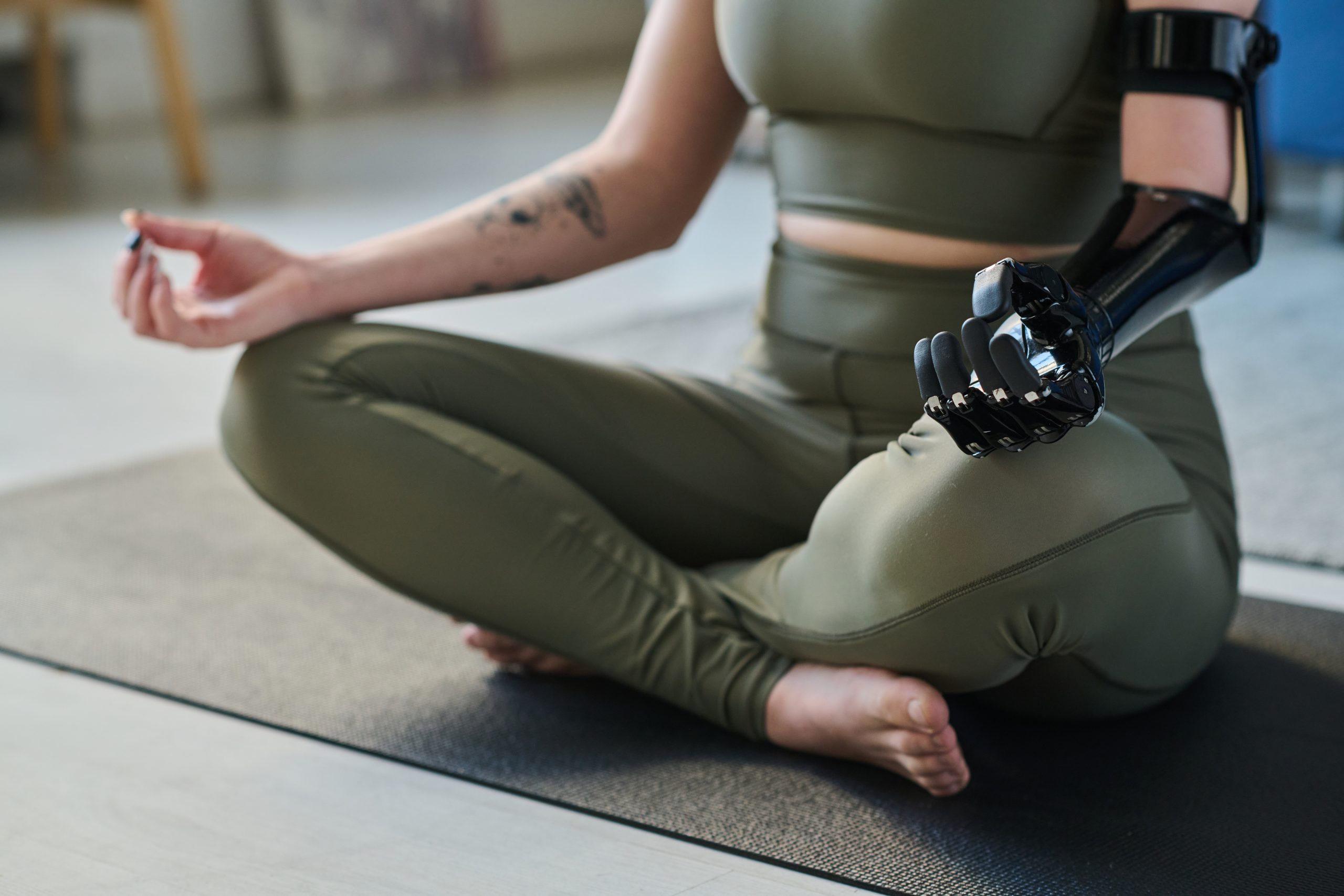
A prosthesis is more than a piece of equipment. For many people living with limb loss, it becomes part of the daily routine—helping with walking, working, travelling, exercising, cooking, or simply moving through the day with greater independence.
Like any piece of equipment that is used for hours at a time, a prosthesis needs regular care. Sweat, skin oils, dirt, moisture, friction, and normal wear can affect the socket, liner, suspension system, joints, and other components. A consistent care routine can improve comfort, protect your skin, and help identify problems before they become more serious.
The exact care instructions depend on your prosthesis and its manufacturer. Your prosthetist should always be your primary source for instructions specific to your equipment.
Start With the Parts That Touch Your Skin
The inside of the socket, prosthetic liners, and other materials that sit directly against the residual limb deserve the most frequent attention. They are exposed to perspiration, dead skin cells, natural skin oils, and heat for many hours each day.
The Amputee Coalition recommends routinely cleaning items that make skin contact and following the manufacturer’s instructions for liners. For many silicone liners, this means cleaning the skin-contact surface daily with warm water and a mild, fragrance-free soap, rinsing it thoroughly, and allowing it to dry completely before it is worn again.
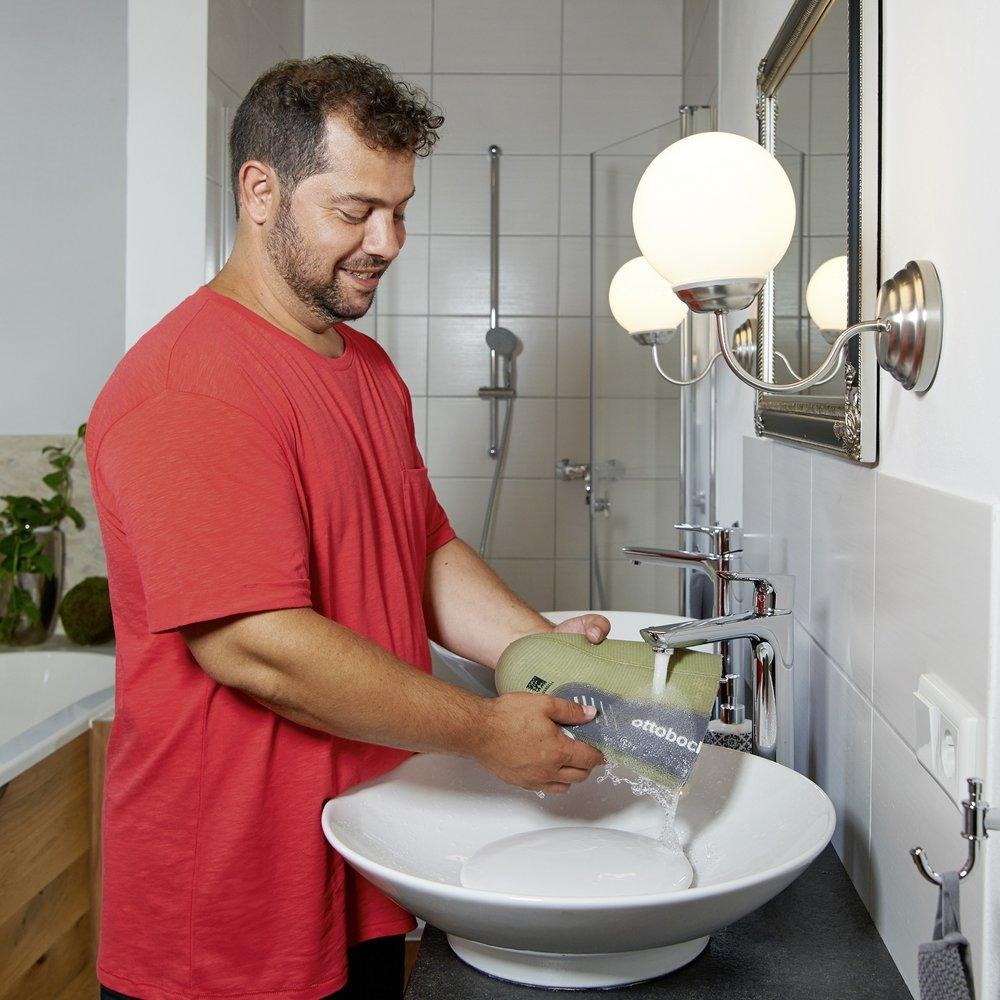
Cleaning a prosthetic liner should become part of the regular daily care routine. Photo: Ottobock/MOVAO.
Caring for Your Liner
Your liner creates an important interface between your skin and the socket. It provides cushioning, helps distribute pressure, reduces friction, and may also form part of the suspension system. Because it sits directly against the skin, a dirty or damaged liner can quickly affect comfort.
Turn the liner inside out as directed and gently clean the surface that contacts your residual limb. Rinse away all soap residue. Dry it according to the manufacturer’s directions and never put a wet liner back onto your residual limb.
Cleaning time is also a good opportunity to look for thinning material, tears, cracks, stretching, or damage around a locking pin or sealing area. A liner does not have to be completely torn before it becomes a problem. If it has changed shape or is no longer fitting properly, show it to your prosthetist.
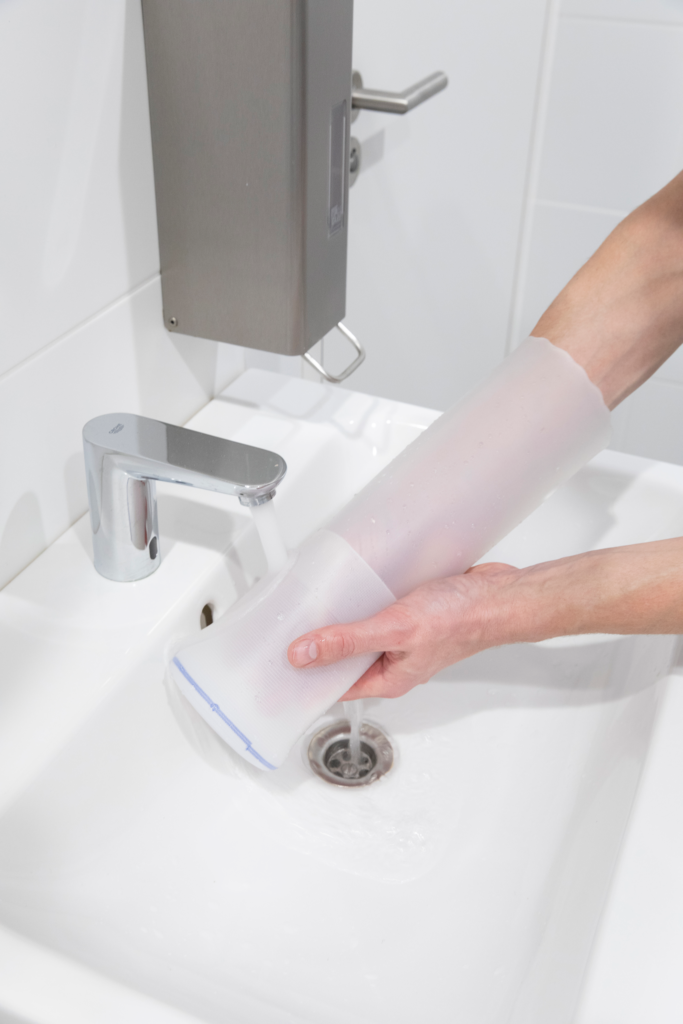
A prosthetic liner being rinsed thoroughly after cleaning. Photo: Össur.
Keep the Socket Clean
The inside of the socket can also collect sweat and debris. If your socket is designed to be cleaned this way, wipe the interior regularly with a clean damp cloth and the product recommended by your prosthetist.
The socket should be dry before the prosthesis is put back on. Avoid soaking it unless you have specifically been told that the complete system can tolerate immersion. Electronic components, vacuum systems, valves, and other parts may have very different water-resistance limits.
Your Residual Limb Is Part of the Care Routine
Caring for the prosthesis and caring for your residual limb go together. When you remove the prosthesis, take a moment to inspect your skin. Over time, you will become familiar with what your residual limb normally looks and feels like.
Temporary redness immediately after removing a prosthesis can occur, but redness that does not fade, repeated pressure marks, blisters, open areas, unusual swelling, drainage, or increasing pain should not simply be ignored.
People who have reduced sensation need to be especially careful because a significant pressure or friction problem may develop without producing much pain.
Watch for Changes in Fit
A prosthesis can be perfectly clean and still cause problems if the fit has changed. Residual-limb volume can change during the day and over longer periods. When the limb becomes smaller, the socket may feel loose and allow excessive movement. When the limb becomes larger, the socket may feel unusually tight.
If you use prosthetic socks, your prosthetist may teach you how to add or remove sock ply to manage ordinary daily fluctuations. However, continually adding more socks is not a substitute for a socket that has become substantially too large.
If your normal adjustments no longer restore a comfortable, secure fit, have the socket evaluated.
Inspect the Prosthesis, Not Just the Liner
You do not need to be a prosthetic technician to notice when something has changed. Become familiar with how your prosthesis normally looks, sounds, and moves.
A new clicking or grinding sound, unexpected movement, a loose feeling, a damaged sleeve, a frayed cable, a crack in a foot shell, or a component that behaves differently should be investigated.
Do not loosen bolts, rotate components, change the alignment, heat the socket, or make structural repairs yourself. A seemingly small adjustment can change the alignment and function of the entire prosthesis.
Caring for Prosthetic Feet and Knees
Lower-limb components are exposed to repeated loading throughout the day. Dirt, sand, water, salt, and debris can also find their way into foot shells or around moving components.
Mechanical, hydraulic, pneumatic, and microprocessor knees have different service requirements. Some require very little user maintenance, while others have specific charging, inspection, or servicing instructions.
Do not apply household lubricants or attempt to dismantle a prosthetic knee, ankle, or foot unless the manufacturer and your prosthetist specifically instruct you to do so.
Caring for Upper-Limb Prostheses
Upper-limb prostheses require many of the same basic habits: clean the skin-contact areas, monitor socket fit, and inspect the components regularly.
Body-powered devices may have cables, harnesses, and terminal devices that should be checked for wear. Myoelectric systems may include electrodes, batteries, motors, powered wrists, elbows, or hands. Reliable electrode contact can be affected by sweat, socket movement, or changes in the residual limb.
If an electric hand, hook, or elbow suddenly responds differently, the problem may involve the component, battery, electrode contact, or socket fit. Your prosthetist can help determine the cause.
Water, Sand, Dirt, and Weather
Never assume that a prosthesis is waterproof simply because one of its components is advertised as waterproof. A waterproof foot may be connected to a knee, vacuum pump, battery, or electronic component with very different restrictions.
If you swim, boat, fish, visit the beach, work outdoors, or spend time around snow and rain, ask your prosthetist exactly what your complete system can tolerate.
Salt water and sand deserve particular attention because they can be hard on mechanical and electronic equipment. Follow the manufacturer’s cleaning instructions after exposure.
Sweat Can Affect More Than Comfort
Perspiration is common inside prosthetic sockets and liners. Besides being uncomfortable, excess moisture can increase friction, affect suspension, contribute to skin irritation, and interfere with electrode contact in some myoelectric systems.
If the residual limb begins moving inside the liner or socket because of moisture, remove the prosthesis when it is safe to do so, dry the skin and liner, and reassess the fit before continuing.
Persistent sweating problems are worth discussing with your prosthetist or healthcare provider because there may be strategies that can help.
Battery and Charging Care
Microprocessor knees, powered ankles, myoelectric hands, powered elbows, and other electronic prostheses require battery management. Develop a charging routine that fits naturally into your day and use the charger intended for your device.
Pay attention if battery life becomes noticeably shorter, charging becomes unreliable, a connector is damaged, or a battery becomes unusually hot or swollen. These are reasons to stop and have the equipment checked rather than continuing to use it.
A Simple Routine Is Usually Enough
You do not need a complicated checklist every time you remove your prosthesis. A consistent routine is more useful than an elaborate one that is difficult to maintain.
● Clean and completely dry the liner and other skin-contact surfaces as instructed.
● Inspect your residual limb and notice any change in redness, pressure, swelling, or skin condition.
● Pay attention to changes in fit, suspension, sound, movement, or component performance.
● Charge powered components when required and keep the appropriate supplies available.
● Contact your prosthetist when something no longer feels or functions the way it normally does.
Regular Professional Maintenance
Even when everything appears to be working properly, periodic prosthetic follow-up is important. A prosthetist can assess socket fit, alignment, suspension, mechanical wear, fasteners, structural components, and changes in your residual limb or activity level.
Some problems develop gradually and may be difficult for the user to notice. A professional evaluation can identify wear or alignment changes before they become a larger comfort or safety issue.

A prosthetic technician inspecting and adjusting a lower-limb prosthesis. Photo: British Association of Prosthetists and Orthotists.
When to Contact Your Prosthetist
You should not have to wait until the prosthesis breaks. Contact your prosthetist when you notice persistent pain, recurring skin problems, a significant change in socket fit, unreliable suspension, new mechanical noises, visible damage, or changes in the behaviour of a knee, foot, hand, hook, or electronic component.
A change in your body can also be a reason for reassessment. Significant weight change, changes in activity level, new mobility goals, or changes in residual-limb shape can all affect whether the current prosthesis remains appropriate.
Travelling With a Prosthesis
Travel can disrupt your normal care routine, so a little preparation helps. Bring the cleaning supplies you normally use, spare prosthetic socks if applicable, charging equipment, and an extra liner when available.
When flying, keeping essential prosthetic supplies in your carry-on luggage can prevent a lost checked bag from leaving you without equipment you need every day.
It is also useful to know the make and model of your major components and to keep your prosthetic clinic’s contact information available.
Questions to Ask Your Prosthetist
The best care routine is the one designed around your actual prosthesis. At your next appointment, consider asking how often your liner should be cleaned, what cleaning products are safe, what parts can get wet, what maintenance you should perform yourself, and how often the prosthesis should receive a professional inspection.
Also ask which changes should cause you to stop using the prosthesis until it can be checked. Knowing this before a problem occurs can make it much easier to decide what to do.
Learning From Other People Living With Limb Loss
Prosthetists and manufacturers should provide the technical instructions for your specific equipment, but other prosthesis users can offer practical ideas for fitting care into everyday life.
People living with limb loss can share how they manage liners while travelling, deal with sweat during long days, organize supplies, recognize changes in socket fit, and prepare for unexpected equipment problems.
Limbloss Connection provides opportunities for people living with limb loss and limb difference to connect, exchange experiences, and learn from one another. Peer experience can be extremely useful when it complements—not replaces—the advice of your prosthetist and healthcare team.
Taking Care of the Equipment You Depend On
A prosthesis works hard. A lower-limb prosthesis may support your body weight thousands of times during a day. An upper-limb prosthesis may help you grasp, carry, work, cook, drive, or participate in activities that matter to you.
Regular cleaning, careful inspection, attention to skin and socket fit, and professional maintenance can help keep that equipment functioning as intended.
The most useful habit is learning what is normal for your prosthesis. When the fit, sound, movement, comfort, or function changes, pay attention. Small problems are often easier to address when they are identified early.