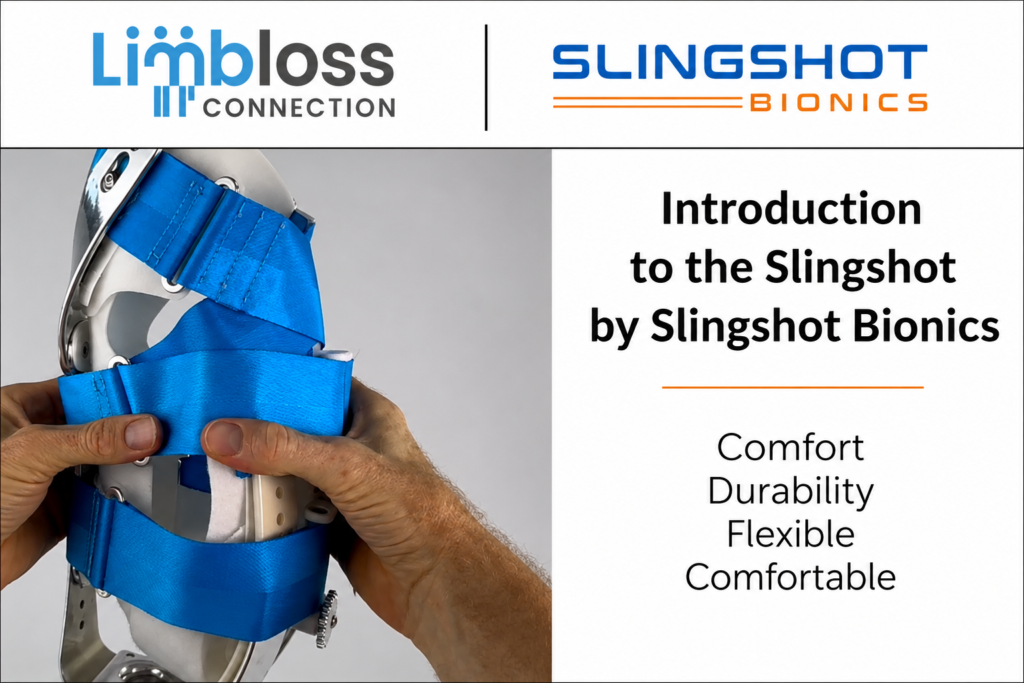
In a world filled with “next-gen” prosthetics, it’s easy to become skeptical. Every year, we’re introduced to something new—often packed with tech, powered by apps, and promised to “revolutionize” mobility. But every now and then, something quieter shows up. Less hype, more substance. That’s what drew my attention to the Slingshot by Slingshot Bionics.
The Slingshot is a compact, mechanical component that fits between your prosthetic foot and socket system. It’s built to do one thing exceptionally well: restore lost energy in every step.
What Makes the Slingshot Different?
Unlike microprocessor-controlled knees or powered ankles, the Slingshot doesn’t use electronics at all. There are no batteries, sensors, or charging cables. Instead, it works like a mechanical spring—absorbing energy when your heel strikes and returning that energy at push-off.
According to its creator, Jay Martin, a former prosthetist and engineer:
“The Slingshot delivers up to 30% more push-off than a carbon fiber foot alone, meaning you walk farther with less effort.”
That caught my eye immediately. Energy return is a huge missing piece for many of us—especially those with above- or below-knee limb loss who walk frequently and feel the fatigue build up over time.
What It Feels Like to Use
The best way to describe the Slingshot? It’s like getting a little “assist” in each step. That’s something most passive prosthetics can’t deliver. While many feet absorb shock well, they don’t give much of that energy back. Over time, the wear and tear of compensating can lead to pain, exhaustion, or even overuse injuries—particularly on the sound side.
Jay puts it plainly:
“We designed the Slingshot to reduce compensations, protect the sound side limb, and make every step more efficient for everyday users.”
That may not sound flashy, but if you live with limb loss, you know how meaningful that is. Small improvements in mechanics can lead to big improvements in how your body feels at the end of the day.
Who Might Benefit Most?
The Slingshot appears ideal for active amputees who walk frequently and want to reduce fatigue—especially those who feel like their current prosthesis isn’t giving enough back. It’s not marketed as a sports prosthetic, but rather something for real-world walking: commuting, errands, family outings, light activity.
It’s also important to say: this isn’t magic. The Slingshot doesn’t replace a foot or a knee—it works with the system you already use. But it could significantly improve the performance of that system.
Cost, Access, and Practicalities
Like most innovations in prosthetics, access can depend heavily on your clinic, prosthetist, and insurance provider. Slingshot Bionics is working to make the device available through more providers across North America, but—as with any new tech—you may need to advocate for it.
Jay Martin acknowledges that accessibility is a priority:
“Our goal is to get this technology to as many amputees as possible, not just those at elite clinics.”
If you’re interested, talk to your prosthetist. Bring questions. Ask about compatibility. See whether a trial is possible. It might take some effort to get your hands—or rather, your steps—on one, but the payoff could be worth it.